Beat the rise! Delivery fees are going up soon. INFO


F. L. Wackers is Senior Researcher at the Centre for Terrestrial Ecology, Netherlands Institute of Ecology (NIOO-KNAW). He has been working in the field of functional biodiversity and conservation biological control for over 15 years. His research focuses on multitrophic interactions between plants, herbivores and their antagonists. As a central theme, Felix Wackers studies the role of plant-derived food supplements in these interactions. In order to obtain insight into the role of sugars in 'food for protection mutualisms' he takes a twin approach, addressing both characteristics of the plant, as well as the potential consumers (their foraging, gustatory responses, energy metabolism and fitness benefits). He has published over 50 peer-reviewed articles in various ecological, entomological and botanical journals. His publications on functional biodiversity and conservation biological control span a period of 15 years. He has also taught insect ecology, tropical entomology, and field ecology, as well as various international PhD courses. Paul C. J. van Rijn's research focuses on ecological and evolutionary consequences of omnivory and intraguild predation in multitrophic interactions. He uniquely combines mathematical formulation of ecological theories with experimental testing, thereby covering the range from individual physiology and behaviour, via population dynamics, to community ecology. Evolutionary theory is used to narrow down ecological assumptions, and vice versa. In 2002 he took up a post-doctorate position at the Netherlands Institute of Ecology (NIOO), Department for Multitrophic Interactions, in Heteren, where he studies (in cooperation with Dr F. L. Wackers) the direct and indirect defense responses of plants to herbivores, and their evolutionary significance. Jan Bruin has a long-time interest in ecological and evolutionary aspects of plant-insect interactions. His active research focuses on interactions between carnivorous mites, phytophagous mites and a variety of host plants. He is co-editor of several books and editor of the journal Experimental and Applied Acarology. Jan Bruin has published over 20 peer-reviewed articles in various ecological and entomological journals.
'The book is a useful contribution for enlarging the published knowledge about general plant-insect interactions, with emphasis on the interactions at more trophic levels than is usually considered. The text is logically divided into a short introduction and three specialized parts ... The structure of the book is straightforward: two chapters are devoted to branching processes overview, followed by more theoretical parts about models, and ending with three chapters full of examples and real data. The book can be used by many researchers and graduate students working on population dynamics ... I appreciate that the text is written with respect to students and that the language used is also friendly for non-native English speaking readers. Thus this book is a good way to start understanding speciation. The target group, however, is not only students or evolutionary ecologists; I can also recommend this book to each institutional/university library and to many population biologists.' Jitka Vilimova, Charles University '...provides a novel perspective on plant-herbivore-carnivore relationships ... a timely review for entomologists and biological control specialists interested in the evolutionary and ecological importance of omnivorous multitrophic interactions. Its exhaustive literature review could be helpful to graduate students and researchers interested in food-web ecology in both natural and managed systems.' Environmental Entomology
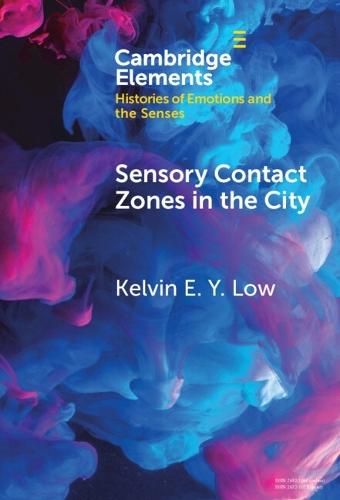
Sensory Contact Zones in the City...
Hardback
$158.95 $127.20
Not in-store but you can order this
Sensory Contact Zones in the City...
Paperback
$53.95 $45.93
Not in-store but you can order this