Beat the rise! Delivery fees are going up soon.


María C. Mandujano studied Biology at the Metropolitan Autonomous University (UAM), and obtained her PhD from the National Autonomous University (UNAM), prior to completing her postdoctoral studies at New Mexico State University, awarded with a grant for a plant ecology project on the LTER (long term ecological research) program. She is currently a researcher at UNAM’s Ecology Institute, where she and her students have been studying various ecological aspects of cacti and pollinators in Cuatro Ciénegas and Mapimí, in the Chihuahuan Desert, and more recently in the drylands of Querétaro. Dr. Mandujano works with threatened and invasive plant species along the North American Deserts, being Cuatro Ciénegas one of her favorite places, as a centre of endemism and a unique oasis. She has made important contributions to the demography, life history and floral biology of desert plants, especially in cacti. She is the editor of the Mexican Journal Cactáceas y Suculentas Mexicanas. Irene Pisanty studied Biology at the School of Sciences (Facultad de Ciencias) of the National Autonomous University of Mexico (UNAM), where she also obtained her Master’s degree in Ecology and Environmental Sciences. She is currently an Associate Professor at the same School of Sciences, where she teaches on ecology, population ecology, natural resources and life histories. She is also interested in the implementation of environmental policies based on sound scientific knowledge and worked as a project manager for Ecosystem Conservation at the Commission for Environmental Cooperation (1995-1998), and as a senior advisor to the president of the National Institute of Ecology (INE) (2001-2007). She is currently exploring the responses of soils and plants to water overexploitation and the disturbances it is producing in the Basin, as well as the functional responses of plants in gypsum environments. Luis E. Eguiarte studied Biology at the School of Sciences (Facultad de Ciencias) of the National Autonomous University of Mexico (UNAM), where he completed his PhD in Ecology in 1990. He subsequently did a postdoc at the Department of Botany and Plant Sciences, University of California at Riverside, under the direction of Professor Michael Clegg. He joined UNAM as an Associate Professor in 1992, and is currently a professor at its Department of Evolutionary Ecology. In 2011 he was awarded the Faustino Miranda Medal by the Institute of Ecology, UNAM, in recognition of his outstanding academic contributions to Ecology. In his research, he studies the evolutionary and ecological mechanisms that generate diversity and adaptation in different organisms, in addition to conservation genetics and the domestication of Mexican plants. He has studied these problems in plants (including Agave, Abies, Bursera, Cucurbita and Zea), in bacteria, in particular in Cuatro Ciénegas, Coahuila, in the Chihuahuan desert, and in various species of mammalsand birds, using modern genetic and statistical methods and genomic data.
Antioxidant Defense in Plants
Molecular Basis of Regulation
Paperback
$564.95 $452.05
Not in-store but you can order this
Zinc in Plants
Current Knowledge and Recent Advances...
Paperback
$402.95
Not in-store but you can order this
Plant Performance Under Environmental...
Hormones, Biostimulants and Sustainable...
Paperback
$415.95 $332.78
Not in-store but you can order this
Reactive Oxygen Species in Plants...
Methods and Protocols
Hardback
$418.95 $334.88
Not in-store but you can order this
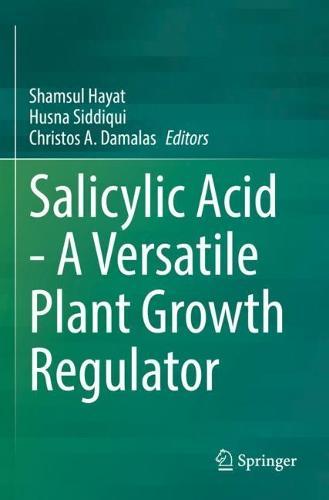
Salicylic Acid - A Versatile Plant...
Paperback
$415.95 $332.78
Not in-store but you can order this
Plant-Microbe Interactions
Laboratory Techniques
Paperback
$326.95 $261.21
Not in-store but you can order this