Beat the rise! Delivery fees are going up soon. INFO


Abid A. Ansari is assistant professor in the Department of Biology, Faculty of Science, University of Tabuk, Saudi Arabia. Dr. Ansari’s research work is concerned with phytoremediation and eutrophication. Dr. Ansari has to his credit a number of research articles of national and international repute, eleven edited books, and a number of book chapters on varied aspects of his field of research. He has been awarded Scientist of the Year and Environmentalist of the Year by the National Environmental Science Academy, India, and Research Excellence by the University of Tabuk. Dr. Sarvajeet Singh Gill is currently working as Professor (Asstt.) at Centre for Biotechnology, Maharshi Dayanand University, Rohtak, Haryana, India. Dr. Sarvajeet Gill’s research includes abiotic stress tolerance in crop plants, reactive oxygen species signaling and antioxidant machinery, gene expression, helicases, crop improvement, transgenics, nitrogen & sulfur metabolism and plant fungal symbiotic interactions. Together with Dr. Narendra Tuteja at ICGEB, New Delhi, he worked on plant helicases for abiotic stress tolerance. His research uncovered new pathways to plant abiotic stress tolerance and indicates the potential for improving crop production at sub-optimal conditions. Sarvajeet Gill has edited several books with Springer, Wiley, Elsevier, CABI etc and has a number of research papers, review articles, and book chapters to his name. Recently, Dr. Sarvajeet Gill conferred with INDIA Research Excellence & Citation Award – 2017 from Clarivate Analytics (Web of Science). Dr. Ritu Gill is currently working as Professor (Asstt.) at Centre for Biotechnology, Maharshi Dayanand University, Rohtak, Haryana, India. Dr. Gill is working on phytoremediation, plant abiotic stress and molecular aspects of host-parasite relations. She has published a number of refereed journal articles, book chapters, books. She has been awarded with various researchfellowships along with the Young Scientist Award by the Indian Society for Parasitology. Guy R. Lanza is a Research Professor in the Department of Environmental and Forest Biology, State University of New York. He also serves as Secretary of the International Expert Advisory Council at the University of Tyumen, Russia. He has previously worked at the Office of Environmental Sciences, Smithsonian Institution, Institute of Environmental Medicine, New York University, the Environmental Science programs at both the University of Texas (Dallas) and the University of Massachusetts (Amherst). His primary research interests are in environmental microbiology, phytoremediation, and aquatic ecology. He has published more than 80 refereed journal articles, book chapters, books, and technical reports. He is a Fellow of the American Academy of Microbiology, serves on the editorial boards of several microbiology journals and served as a Fulbright Scholar in Vietnam and Russia. Lee Newman is an Associate Professor in the Department of Environmental and Forest Biology, State University of New York. Dr. Lee’s primary research interests are in phytoremediation and interactions between plants and endophytic bacteria. She has published a number of refereed journal articles, book chapters, books, and technical reports.
Ecological Intensification of Natural...
Paperback
$564.95 $452.05
Not in-store but you can order this
Seed Science and Technology
Biology, Production, Quality
Hardback
$126.95 $101.37
Not in-store but you can order this
Antioxidants in Plant-Microbe Interaction...
Paperback
$609.95 $487.82
Not in-store but you can order this
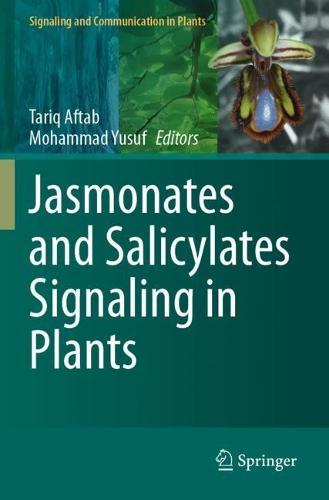
Jasmonates and Salicylates Signaling...
Paperback
$609.95 $487.82
Not in-store but you can order this
Accelerated Plant Breeding, Volume...
Oil Crops
Paperback
$415.95 $332.78
Not in-store but you can order this
Plant-Microbe Interactions
Laboratory Techniques
Paperback
$326.95 $261.21
Not in-store but you can order this