Bargains! PROMOTIONS


Demosthenes Katritsis is an internationally recognized cardiologist specializing in interventional cardiology and electrophysiology. He trained in London at St Thomas' and St George's Hospitals and has held academic appointments at Harvard Medical School and Johns Hopkins University. Dr. Katritsis has published over 350 scientific papers and co-authored leading textbooks on clinical cardiology and cardiac electrophysiology. He currently directs the Unit of Advanced Interventional Cardiology and Electrophysiology at Hygeia Hospital in Athens. Robert H. Anderson is internationally recognized as a leading expert on the structure and development of the normal and congenitally malformed heart, with a focus on cardiac conduction tissues. Throughout his career at Royal Brompton and Great Ormond Street Hospitals, his research supported clinical practice and surgical innovation for congenital heart defects. Upon retirement, he became Emeritus Professor at University College London and continues active research as a Professorial Fellow at Newcastle University and Honorary Consultant at Birmingham Children's Hospital. He has retained long-standing connections with the University of Pittsburgh and other US institutions, where he regularly leads masterclasses on cardiac anatomy. In 2018, he worked at the All India Institute of Medical Sciences in New Delhi. His contributions have earned him honorary fellowships and doctorates from organizations in Europe and North America. Diane E. Spicer was initially trained as a pathologists' assistant at the Children's Hospital of Pittsburgh. Over the past 43 years she has worked in the field of fetal and pediatric pathology with a special emphasis on autopsy pathology and congenital heart disease. Currently, she serves as the curator of the Van Mierop Congenital Heart Archive at the University of Florida and is the senior archivist for the Archiving Working Group which is a part of the International Society for Nomenclature for Paediatric and Congenital Heart Disease. At present, she holds the position of cardiac morphologist in the Heart Institute at Johns Hopkins All Children's Hospital in St. Petersburg, Florida and is curator of their congenital cardiac archive. She has participated in many peer reviewed publications and has been on the faculty of many national and international conferences. Damián Sánchez-Quintana is a distinguished anatomist and researcher in cardiac morphology. He earned his medical degree from the University of Extremadura in 1979, where he later completed a doctoral thesis on the architecture of the ventricular myocardium in fish, and was awarded Cum Laude in 1986. He became Associate Professor of Human Anatomy and Embryology in 1987 and held visiting research positions in London and Graz, collaborating with renowned experts in cardiac anatomy. In 2008, he was appointed Chair of Human Anatomy and Embryology at the University of Extremadura, serving until his retirement in 2020. Over his career, he supervised 13 doctoral theses, published nearly 200 scientific articles, and was cited over 12,000 times. His work has significantly advanced the understanding of cardiac arrhythmias, and he contributed to the development of the Imaging Anatomy atlas series published by Thieme. Justin T. Tretter is a pediatric cardiologist, advanced cardiac imager, and Professor of Pediatrics at Cleveland Clinic Lerner College of Medicine, as well as Adjunct Professor of Anatomical Sciences at St. George's University. He trained in pediatric cardiology and advanced imaging at NYU and Cincinnati Children's, with specialized mentorship in cardiac morphology under Professor Robert Anderson. He is the former founder and editor of Heart University, has published over 185 peer-reviewed articles, and is editor-in-chief of the 5th edition of Anderson's Pediatric Cardiology. Dr. Tretter serves as Director of Advanced Cardiac Imaging, Co-Director of a Congenital Valve Surgical Planning Center, and Director of Cardiac Morphology at Cleveland Clinic. He is also Lead Medical Scientist for Cara Medical, Ltd., which develops software to non-invasively locate the cardiac conduction system to guide structural heart and pacing procedures.
NCLEX-PN Prep, Seventeenth Edition...
Includes 1 Full Length Practice...
Paperback
$89.99
Forthcoming
You can preorder this
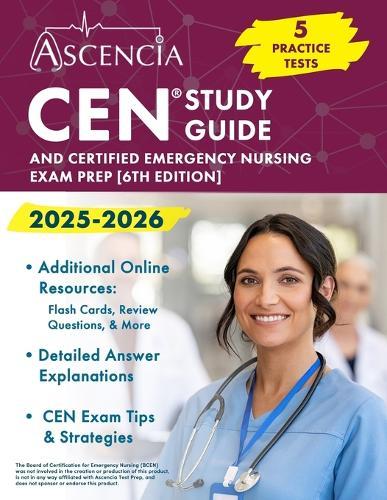
CEN Study Guide 2025-2026
5 Practice Tests and Certified Emergency...
Paperback
$90.95 $77.10
Forthcoming
You can preorder this
OAT Prep Plus, Sixth Edition (2025)...
Includes 16 Pages of Full Color...
Paperback
$175
Forthcoming
You can preorder this
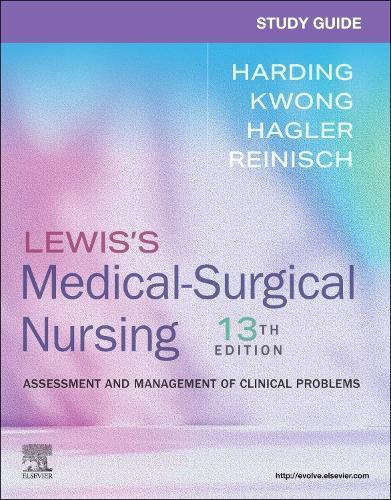
Study Guide for Lewis's Medical-Surgical...
Assessment and Management of Clinical...
Paperback
$79.95
Forthcoming
You can preorder this
NLN PAX Math Workbook
PAX Math Exercises, Tutorials and...
Paperback
$43.95 $37.12
Forthcoming
You can preorder this
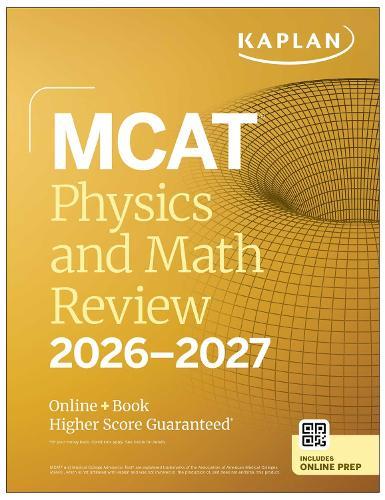
MCAT Physics and Math Review 2026-2027...
Online + Book
Paperback
$140
Forthcoming
You can preorder this