Bargains! PROMOTIONS


Mário F. S. Ferreira is a Professor at the Physics Department of Aveiro University, Portugal. His research interests have been concerned with the modelling and characterization of multi-section semiconductor lasers for coherent systems, quantum well lasers, optical fiber amplifiers and lasers, optical sensors, soliton propagation, polarization and nonlinear effects in optical fibers. He has been the leader of the Optics and Optoelectronics Group of the I3N – Institute of Nanostructures, Nanomodelling and Nanofabrication. He has written about 400 scientific journal and conference publications, and several books, namely: “Optics and Photonics” (Lidel, 2003, in Portuguese), “Topics of Mathematical Physics” (Editora Ciência Moderna, 2018, Brazil, in Portuguese), “Optical Fibers: Technology, Communications and recent Advances” (NOVA Science Publishers, 2017), “Advances in Optoelectronic Technology and Industry Development” (CRC Press, 2019), “Nonlinear Effects in Optical Fibers” (Wiley, 2011), “Optical Signal Processing in Highly Nonlinear Fibers” (CRC Press, 2020), “Optical Fiber Technology and Applications – Recent Advances” (IOP Publishing, 2021), “Solitons in Optical Fiber Systems” (Wiley, 2022), “Dissipative Optical Solitons” (Springer, 2022), “Photonic Crystal Fibers - Recent Advances” (NOVA Science Publishers, 2023), “Specialty Optical Fibers - Materials, Fabrication Technology and Applications” (Elsevier, 2024), “Optical Fiber Lasers” (Springer, 2026), and “Lasers Optics and Photonics” (Oxford University Press, 2026). He was also the Guest Editor of several Special Issues. He is a Fellow and a Travelling Lecturer of both OPTICA (Optical Society of America) and SPIE - The International Society for Optics and Photonics, and a Member of IEEE. He served in various committees of OSA/OPTICA and of SPIE, as well as in the organizing and scientific committees of various international conferences. Actually, he serves also as an Associate Editor or as an Advisor Board Member of several international journals in the area of optics and photonics. Dr. Mukul Chandra Paul received his Ph.D. from Jadavpur University, Kolkata, in 2003. He served as Chief Scientist, Divisional Chair of the Fiber Optics and Photonics Division, and HOD of the Instrumentation and Information Technology Division at CSIR–Central Glass and Ceramic Research Institute, Kolkata. He has authored over 250 peer-reviewed papers and 15 book chapters, holds eight U.S. patents on rare-earth-doped specialty optical fibers, and has edited three books on fiber lasers and specialty fibers. His research has advanced the field through collaborations with institutions in Malaysia, China, Taiwan, the UK, France, Russia, Vietnam, and Portugal. His honors include the BOYSCAST Fellowship (2006), MOSTI Award (2010), IEEE Photonics Distinguished Lecture Award (2011), CSIR Technology Awards (2012, 2015), DST-UKIERI Award (2013), Indo-Russian (RFBR) Grant (2016), Indo-Portugal (FCT) Grant (2017), Senior Visiting Scientist Award, NTUT (2020), CK Somany Award (2020), Adjunct Professorship, Airlangga University (2021), Platinum Jubilee Distinguished Scientist (2025), and Senior IEEE Membership (2025). He is a Senior Member of IEEE and OSA, a Life Member of MRSI and the Indian Ceramic Society, and serves on Technical Committees CHD C and LITD 11 under the Bureau of Indian Standards. Dr. Paul has supervised 6 Ph.D. scholars and 10 M.Sc. projects and served as PI for 17 sponsored projects totaling ₹416 lakhs. Overall, as PI/Co-PI/member, he has completed 34 projects with ₹46.0 crores in funding. He has delivered 50+ invited talks and served as Guest Editor/Editor for special issue of leading journals, including IEEE JSTQE (2014), Current Nano Science (2015), Optical Materials Express (2019), and IEEE Photonics Journal (2019). He edited Fiber Laser (InTech, 2016), Fiber Laser: Advances in Research and Applications (Nova, 2017), and most recently Specialty Optical Fibers (Elsevier, 2024). Post-retirement, his research interest will be developing next-generation specialty optical fibers using advanced optical materials for photonic devices in collaboration with industry and academia.
Emerging Nanodielectric Materials...
From Bench to Field
Hardback
$364.95 $292.19
Not in-store but you can order this
Breaking Boundaries
Pioneering Sustainable Solutions...
Hardback
$385.95 $308.92
Not in-store but you can order this
Energy Efficiency in Oil Production...
Paperback
$96.95 $82.36
Not in-store but you can order this
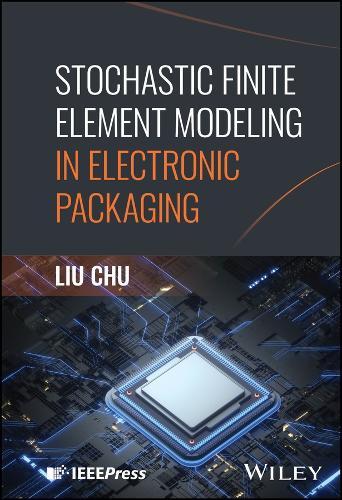
Stochastic Finite Element Modeling...
Hardback
$263.95 $210.76
Not in-store but you can order this
Magnetoelectric Composites
Materials, Structures, and Applications...
Paperback
$467.95
Not in-store but you can order this
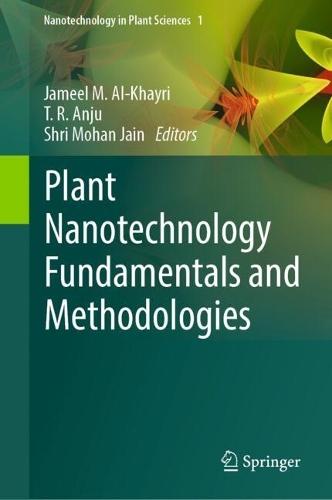
Plant Nanotechnology Fundamentals...
Hardback
$564.95 $452.05
Not in-store but you can order this