15% OFF GIFT VOUCHERS! SHOW ME


Flora Willson is a UK-based writer, broadcaster, and cultural historian of music. Until 2025, she was a senior lecturer in nineteenth-century music at King’s College London. Her research is published in numerous journals and essay collections. Beyond academia, Willson is one of The Guardian’s classical music writers, appears frequently on BBC radio, and works closely with opera companies and other arts organizations on publications and events.
“Operatic Infrastructures makes us think in new ways about music and material culture. With a keen eye for the telling detail, a nose for an untapped historical source, and an ear for revelatory voices, Flora Willson demonstrates how operatic life in London, Paris, and New York was enmeshed in urban landscapes navigated by emerging technologies. This tour de force of archival research combined with theoretical savvy is a vital intervention in nineteenth-century opera studies.” * Laura Tunbridge, University of Oxford * “Willson’s Operatic Infrastructures is a vivid account of late nineteenth-century opera’s material affordances and media channels. We learn how the mortar, wood, fabric, and architecture of opera houses, the objects they contained, and the fires that obliterated them came to inflect opera’s sounds and its productions, and how electrical wires, paper trails, and chains of transportation and communication created synergies that catapulted opera into the modern era. A meticulous and invaluable new history covering a critical period in opera’s lifespan.” * Carolyn Abbate, Harvard University * “Operatic Infrastructures is a pyrotechnical achievement. Willson’s prose positively flickers with insights, as she dispatches us down intercontinental telephone lines, along undercity train tracks, through postal networks and international news outlets, into insurance offices, and inside production workshops and costume storage facilities—before drawing these volatile infrastructures back into the great opera houses of 1890s London, Paris, and New York. This is the richest account we have of the art form’s material history, of the hidden media we didn’t know we loved, and of the flammable stuff of opera.” * James Q. Davies, University of California, Berkeley *
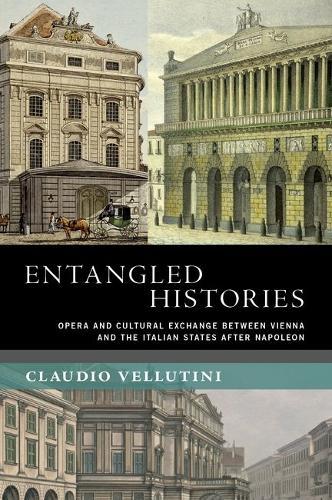
Entangled Histories
Opera and Cultural Exchange between...
Hardback
$245.95
Forthcoming
You can preorder this