Bargains! PROMOTIONS


Stefan Bilbao, School of Arts, Culture and Environment, University of Edinburgh, UK Dr Stefan Bilbao is currently a Lecturer of Music at the University of Edinburgh, specializing in sound synthesis based on physical models of musical instruments, with a particular focus on the intersection between digital filtering techniques and numerical simulation methods. He has been involved in computer music research since 1992, working firstly at the Institut de Recherche et Coordination Acoustique Musicale (IRCAM) under a joint fellowship with Harvard University, then at the Space, Telecommunications and Radioscience Laboratory (STAR Lab). Dr Bilbao then moved UK to take a post as a Lecturer at the Sonic Arts Research Centre (SARC) at the Queens University, Belfast, and in 2005, at the School of Arts, Culture and Environment at the University of Edinburgh. He is now undertaking a project supported by the Engineering and Physical Sciences Research Council UK for the development of new numerical techniques for sound synthesis. He teaches both undergraduate and postgraduate courses on musical acoustics, DSP, and musical applications of Fourier theory and has written over 10 published journal articles, 30 conference papers and the book Wave and Scattering Methods for Numerical Simulation for Wiley, published in 2004.
It was a pleasure to read this book, which can be approached from many perspectives. In fact, the author uses a style of writing which can be easily understood from undergraduates and graduates, but, at the same time, there are chapters which contain several technical notions, ideal for PhD students and experts of acoustics. (Zentralblatt Math, 2010) In a nutshell, a very worthy contribution to the field, Bilbao's Numerical Sound Synthesis does a remarkably good job of synthesizing key ideas in a in a lively manner, exploring complex issues in a consistent manner, without simplification, thereby offering an invaluable companion to those who have just entered the field and to experts in coming to grips with the issues involved in numerical sound synthesis. (Current Engineering Practice, 1 November 2010) I highly recommend this book as an introduction to the field of physical modeling for sound synthesis, which is becoming more and more popular with the tremendous increase in affordable computer power, through multicore desktops and laptops and supercomputer-like graphics processing unit (GPU) engines. ( Computing Reviews, October 2010)
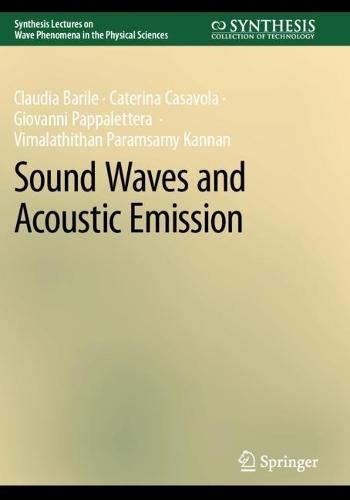
Sound Waves and Acoustic Emission...
Paperback
$147.95 $118.08
Not in-store but you can order this
Wild Track
Sound, Text and the Idea of Birdsong...
Paperback
$59.99
Not in-store but you can order this
COM Component Construction
Advanced Techniques For Efficient...
Paperback
$54.95 $46.64
Not in-store but you can order this
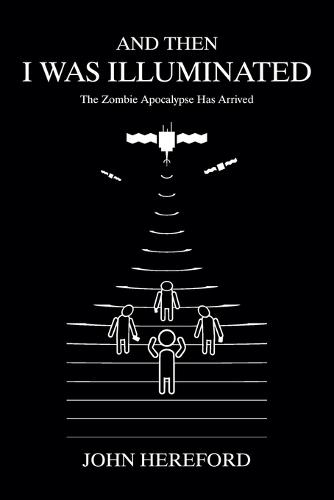
And Then I Was Illuminated
The Zombie Apocalypse Has Arrived...
Paperback
$85.95 $73.43
Not in-store but you can order this