Bargains! PROMOTIONS


Nathaniel L. Moir is a research associate in the Applied History Project at the John F. Kennedy School of Government, Harvard University. He is a veteran of the war in Afghanistan, a former senior research fellow at the Naval Postgraduate School, and a former Ernest May Postdoctoral Fellow in History and Policy at the Kennedy School.
'More than a biography, this is a meticulous, painstaking, deeply detailed account of 30 years of Vietnam's agony at the hands of both the French and the Americans.' -- Asia Sentinel 'Moir shines with this timely, relevant appraisal of Bernard Fall, the most perceptive critic of French and American political-military operations in Southeast Asia during the Cold War era. A superb evaluation of Fall and his influential scholarship on revolutionary warfare.' -- Gregory A. Daddis, USS Midway Chair in Modern U.S. Military History, San Diego State University 'Original and exceptionally well-researched, this will be popular amongst scholars and readers of the Second World War and the Cold War.' -- Craig Whiteside, Associate Professor of National Security Affairs, U.S. Naval War College, and a co-author of The ISIS Reader 'Moir's book illuminates the contributions of a very influential figure and fills a major gap in the historiography of the Vietnam War, the history of military thinking on Revolutionary Warfare. Enlightening.' -- Sophie Quinn-Judge, author of Ho Chi Minh and The Third Force in the Vietnam War 'Bernard Fall remains one of our foremost up-close analysts of the long struggle for Vietnam. In this superb study he gets the nuanced and incisive treatment he deserves.' -- Fredrik Logevall, Professor of History, Harvard University ' To win the military battle but lose the political war could well become the U.S. fate in Vietnam, observed Bernard Fall in 1962. In Number One Realist, Nathaniel Moir gives us a superbly rich biography, combined with an illuminating history of irregular and revolutionary warfare, subjects on which Fall was one of the twentieth century's pioneering authorities. This is much more than a contribution to the history of that long and complex war in Indochina, the end of which Fall did not live to see. It is a profound study of war as a perennial human phenomenon and how best to think and write about it.' -- Niall Ferguson, Milbank Family Senior Fellow, Hoover Institution, Stanford, and author of Kissinger, 1923-1968: The Idealist
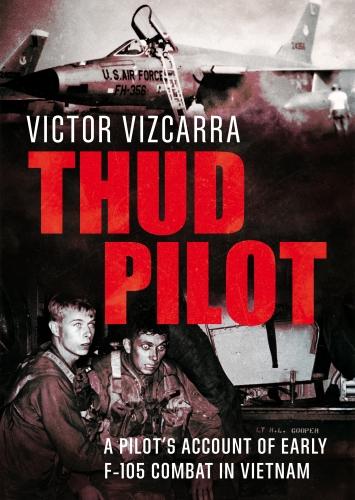
Thud Pilot
A Pilot’s Account of Early F-105...
Paperback
$45.99
Not in-store but you can order this
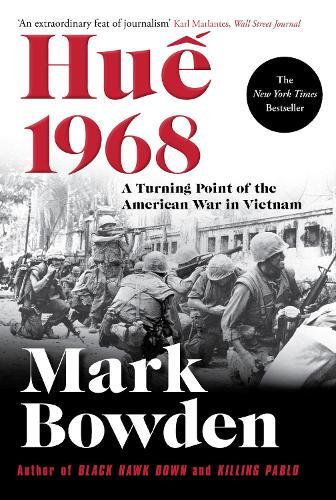
Hue 1968
A Turning Point of the American...
Paperback
$34.99
Not in-store but you can order this
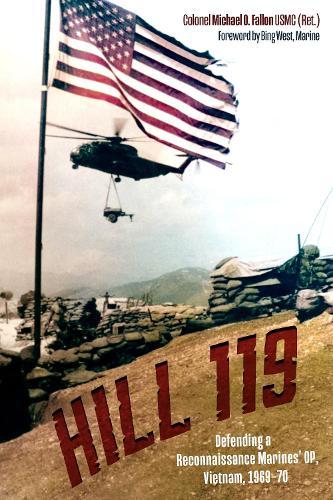
Hill 119
Defending a Reconnaissance Marines’...
Hardback
$99
Not in-store but you can order this
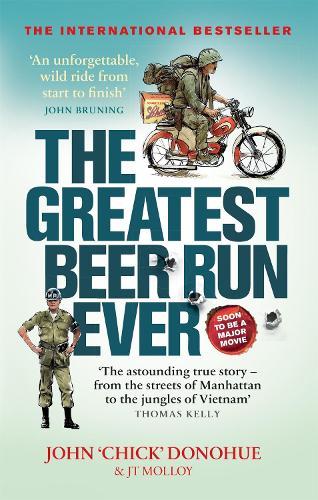
The Greatest Beer Run Ever
A Crazy Adventure in a Crazy War...
Paperback
$22.99
Not in-store but you can order this
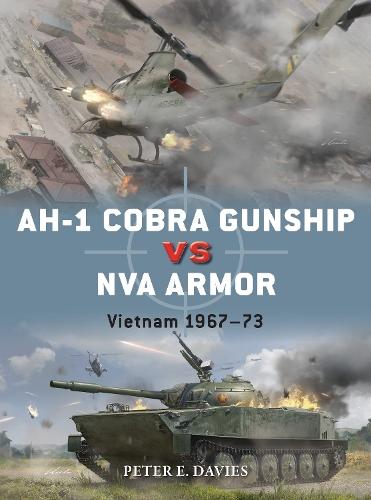
AH-1 Cobra Gunship vs NVA Armor...
Vietnam 1967–73
Paperback
$39.99
Not in-store but you can order this
Madame Nhu & The King of Camelot...
Hardback
$45.95 $39.25
Not in-store but you can order this