Beat the rise! Delivery fees are going up soon. INFO


Lee Edelman is Professor of English at Tufts University. He is the author of Homographesis: Essays in Gay Literary and Cultural Theory and Transmemberment of Song: Hart Crane's Anatomies of Rhetoric and Desire.
The book represents a rigorous attempt to think at once generatively and against tropes of generation, to work at once in irony and in earnest to demonstrate the political's material dependence on Symbolic homo-logy. Whether we decide to follow Edelman's example of rejecting the future or vehemently react against his polemic, No Future leaves no doubt that we cannot get around thinking critically about the uses and abuses of futurity. The book represents a rigorous attempt to think at once generatively and against tropes of generation, to work at once in irony and in earnest to demonstrate the political's material dependence on Symbolic homo-logy. - Jana Funke, thirdspace One of the great virtues of Edelman's thesis is that it restores the distinction between queerness and homosexuality per se. Edelman goes some way to returning the uncanniness attached to queerness which has been dispelled by the very signifier 'gay' and the cosy, Kylie-loving, unthreatening cheeriness with which it has become associated. - K-Punk This is a book, I confess, that I would love to have written. Angry, eloquent, precise, beautifully composed, funny, over the top, and very smart, the four chapters ... articulate a controversial and disturbingly persuasive figural and rhetorical diagnostic of a moment in U.S. political life. - Carla Freccero, GLQ Edelman has certainly articulated a new direction for queer theory, making No Future required reading both within the field and beyond. - Andrea Fontenot, Modern Fiction Studies The book represents a rigorous attempt to think at once generatively and against tropes of generation, to work at once in irony and in earnest to demonstrate the political's material dependence on Symbolic homo-logy. - Carolyn Denver, Victorian Studies No Future is a nuanced polemic, both ringingly clear in its aesthetic and theoretical explications and simply thrilling to read. I learn so much from the way Lee Edelman grounds a queer ethics and politics outside kinship and reproductive circuits, those spaces of assimilation that use the bribe of futurity to distract us from the ongoing work of social violence and death. -Lauren Berlant, author of The Queen of America Goes to Washington City: Essays on Sex and Citizenship In consistently brilliant theoretical discussions (for the most part, psychoanalytically inspired), as well as in strikingly original readings of Dickens, George Eliot, and Hitchcock, Lee Edelman argues that in a political culture dominated by the sentimental illusions and frequently murderous moral imperatives of 'reproductive futurism,' homosexuality has been assigned-and should deliberately and defiantly take on-the burden of a negativity at once embedded within and violently disavowed by that culture. The paradoxical dignity of queerness would be its refusal to believe in a redemptive future, its embrace of the unintelligibility, even the inhumanity inherent in sexuality. Edelman's extraordinary text is so powerful that we could perhaps reproach him only for not spelling out the mode in which we might survive our necessary assent to his argument. -Leo Bersani, author of The Culture of Redemption, Homos, and, with Ulysse Dutoit, Caravaggio's Secrets No Future is a highly imaginative, terrifically suggestive, and altogether powerful book. The question at its political heart is an arresting one, not least because it appears so counterintuitive: Must every political vision be a vision of the future? This is the first study I know that submits the rhetoric of futurity itself to close scrutiny. An intellectually thrilling book. -Diana Fuss, author of The Sense of an Interior: Four Writers and the Rooms that Shaped Them Edelman has certainly articulated a new direction for queer theory, making No Future required reading both within the field and beyond. -- Andrea Fontenot, Modern Fiction Studies The book represents a rigorous attempt to think at once generatively and against tropes of generation, to work at once in irony and in earnest to demonstrate the political's material dependence on Symbolic homo-logy. -- Carolyn Denver, Victorian Studies The book represents a rigorous attempt to think at once generatively and against tropes of generation, to work at once in irony and in earnest to demonstrate the political's material dependence on Symbolic homo-logy. Whether we decide to follow Edelman's example of rejecting the future or vehemently react against his polemic, No Future leaves no doubt that we cannot get around thinking critically about the uses and abuses of futurity. The book represents a rigorous attempt to think at once generatively and against tropes of generation, to work at once in irony and in earnest to demonstrate the political's material dependence on Symbolic homo-logy. -- Jana Funke, thirdspace One of the great virtues of Edelman's thesis is that it restores the distinction between queerness and homosexuality per se. Edelman goes some way to returning the uncanniness attached to queerness which has been dispelled by the very signifier 'gay' and the cosy, Kylie-loving, unthreatening cheeriness with which it has become associated. -- K-Punk This is a book, I confess, that I would love to have written. Angry, eloquent, precise, beautifully composed, funny, over the top, and very smart, the four chapters ... articulate a controversial and disturbingly persuasive figural and rhetorical diagnostic of a moment in U.S. political life. -- Carla Freccero, GLQ
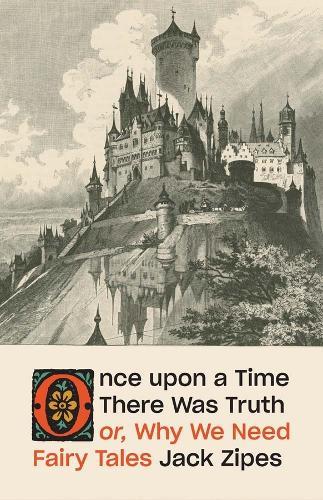
Once upon a Time There Was Truth...
or, Why We Need Fairy Tales
Hardback
$41.95
Not in-store but you can order this
The Routledge Anthology of Climate...
Volume One
Paperback
$75.99
Not in-store but you can order this