Beat the rise! Delivery fees are going up soon. INFO


Alain Badiou is one of the most important philosophers of our time. He is emeritus professor of philosophy at the École normale supérieure in Paris. His seminars published by Columbia University Press include Images of the Present Time (2023) and Parmenides (2025). Bruno Bosteels is dean of humanities and Jesse and George Siegel Professor in the Humanities in the Department of Latin American and Iberian Cultures at Columbia University. Susan Spitzer is a frequent translator of Badiou’s works.
In this seminar, Badiou sets out to address fundamental questions that concern any engagement with Nietzsche and his legacy: In what sense is he a philosopher? In what sense might ‘we’ or our century be called ‘Nietzschean’? And how might engagement with Nietzsche and his most incisive readers clarify the wider relation between philosophy and art? These questions are filtered through the literally decisive question of value. This puts Badiou and Nietzsche on a fascinating collision course, as regards the value of truth, of affirmation, and of philosophy itself. -- Peter Hallward, author of <i>Badiou: A Subject to Truth</i> This book supplies a completely novel interpretation of the importance of Nietzsche’s philosophy for the contemporary world. In Badiou's examination of his late writings, Nietzsche ceases to be just a worthy antagonist for Badiou’s thought and becomes instead a valuable ally in his philosophical project. What emerges here is a breathtaking exploration of Nietzsche that departs from all the received wisdom. -- Todd McGowan, author of <i>Pure Excess: Capitalism and the Commodity</i> In this remarkable seminar, the “Prince of philosophy” turns his attention to the “Prince of anti-philosophy.” Badiou’s reading of the final Nietzsche is at once rigorous and enchanting: he traces how Nietzsche configures event, act, and art—only to push this configuration to the point of detonation. That detonation, in turn, illuminates another configuration: that of Badiou’s own philosophy. Within it, the anti-philosophers—Saint Paul, Wittgenstein, Lacan, and of course Nietzsche—occupy a privileged place: not as adversaries, but as sites where the relation between philosophy and its conditions—politics, science, love, and art—appears in a strikingly illuminating way. -- Alenka Zupančič, author of <i>The Shortest Shadow: Nietzsche's Philosophy of the Two</i>
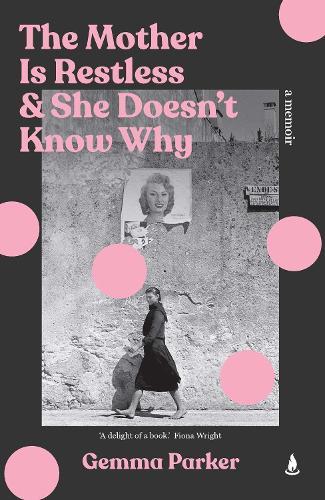
The Mother Is Restless and She Doesn't...
Finding Freedom in the Cage
Paperback
$34.99
In Stock 😊