Bargains! PROMOTIONS


Arthur Jacobs is Professor of Experimental and Neurocognitive Psychology at Freie Universitt Berlin (FUB). He is (co-)author of more than 250 scientific publications in the fields of reading research, psycholinguistics, affective neuroscience and neurocognitive poetics, among which is the book Gehirn und Gedicht (Brain and Poetry, 2011; with R. Schrott).
This is a seminal and ground-breaking work that will hold a special interest for psychology students, researchers and practitioners in the field of cognitive psychology and verbal communications. -- Midwest Jacobs’ book appears as a living creature still in progress, making the content believable for the readers and applicable in their own research experience. [...] It actually shows how literature – weaving together the various branches of knowledge – offers a way to better understand the human nature in its fascinating complexity and the whole material world determining and surrounding it. This might certainly seem an immeasurable goal, far beyond all hope of achievement, but it is exactly thanks to this new transdisciplinary perspective ... that nowadays literature is so alive.—Enthymema “This is a game-changing book which opens up the middle ground of reading, finding ways of connecting the details of the text to the cognitive and neurological structures which we bring as readers, all the way from individual sounds up to whole plot structures. It combines brain science, linguistics, and literary criticism and throughout demonstrates how experimental methods can open up new ways of understanding old problems.” -- Nigel Fabb, University of Strathclyde, UK. ""A pioneer in the study of how literary works stir our emotions and transport us to faraway worlds, Jacobs recounts his decades-long personal journey that, through neuroscience and computational linguistics, culminates in a fascinating account of how this magic happens."" -- Emanuele Castano, University of Trento and The Institute for Cognitive Sciences and Technologies, CNR, Italy “How does the brain make books light up so that we can’t stop reading? Arthur Jacobs embarks on a scientific journey to the principles of poetics and reveals nothing less than the natural history of our passions. His extraordinary neurocomputational approach makes this book a worthy successor to Roman Jacobson’s Poetics in the 21st Century.” — Gerhard Lauer, Book and Reading Studies, Gutenberg University of Mainz
The Evolution of the Sensitive Soul...
Learning and the Origins of Consciousness...
Hardback
$130
Not in-store but you can order this
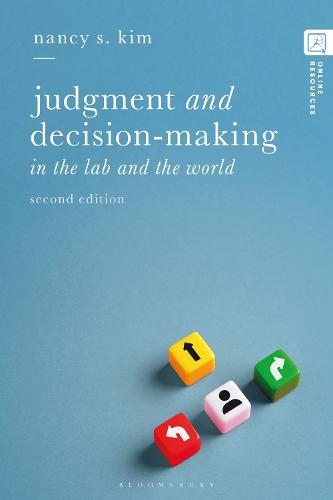
Judgment and Decision-making
In the Lab and the World
Paperback
$76.99
Not in-store but you can order this
How Stories Change Us
A Developmental Science of Stories...
Hardback
$73.95
Not in-store but you can order this
The Age of Diagnosis
How Our Obsession with Medical Labels...
Hardback
$66.95
Not in-store but you can order this