PRIZES to win! PROMOTIONS


Kelsea Best is an Assistant Professor of Civil, Environmental and Geodetic Engineering and City and Regional Planning at the Ohio State University where she studies equity in climate impacts and adaptations, including climate-related mobility. She has consulted for the US Department of State and the National Geospatial Intelligence Agency. She is an active member of the Association of American Geographers and the Society for Risk Analysis. Kayly Ober is an adjunct professor at Georgetown University. She has worked on climate, migration, and conflict for 15 years, including as a lead author of the World Bank report “Groundswell: Preparing for Internal Climate Migration.” She is currently a senior advisor for the Bureau of Conflict and Stabilization Operations at the US Department of State. Robert A. McLeman is Professor of Geography and Environmental Studies at Wilfrid Laurier University in Waterloo, Canada. He has researched climate-related migration and displacement for more than two decades, advised many governments and international agencies on related issues, and served as coordinating lead author for the Sixth Assessment Report of the Intergovernmental Panel on Climate Change and has been a consultant for numerous multilateral and government agencies. A former Canadian diplomat, he wrote Climate and Human Migration: Past Experiences, Future Challenges (Cambridge University Press, 2014).
'Migration and Displacement in a Changing Climate draws on evidence from the social and natural sciences, and from examples from across the globe, to provide an authoritative, balanced and comprehensive guide that cuts through the hyperbole and points to constructive ways to respond to this powerful emerging risk to social order.' Jon Barnett, The University of Melbourne 'Migration and Displacement in a Changing Climate provides an excellent resource for those new to the topic of climate-related mobility as well as those with years of experience. The authors skilfully build a foundation through definitions and a review of research on migration drivers, and then build on these foundations with careful review of research findings in both social and natural sciences. Compelling case studies illuminate the lessons learned. Especially important and useful in today's conflict-ridden world is that the authors never lose sight of the fundamental humanity inherent within population movement, both now and in centuries past.' Lori M. Hunter, University of Colorado, Boulder 'Best, Ober, and McLeman provide a unique reference of case studies on climate-affected migration in the U.S. and elsewhere while positioning them in the context of interdisciplinary theory and policy. I finally have a resource I can use in my own class that includes all of the fundamental material on the subject in one place.' Valerie Mueller, Arizona State University
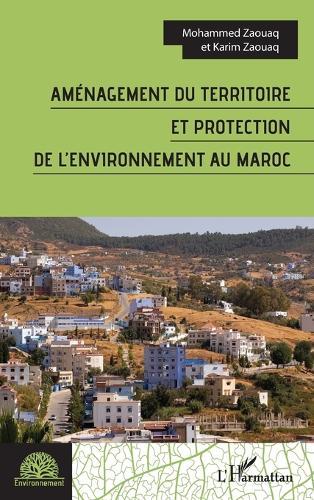
Aménagement du territoire et protection...
Paperback
$38.95
Not in-store but you can order this
Border Witness
Reimagining the US-Mexico Borderlands...
Paperback
$49.95
Not in-store but you can order this
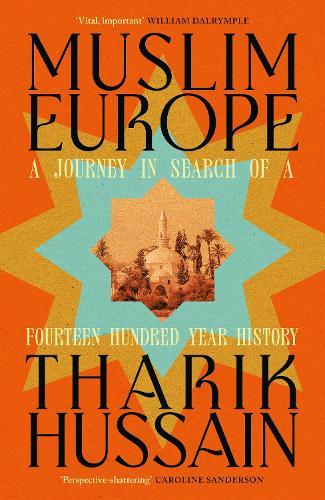
Muslim Europe
A Journey in Search of a Fourteen...
Hardback
$59.99
Not in-store but you can order this