Bargains! PROMOTIONS


Professor Natarajan Chandrasekaran FRES, FRSB, FRSC, Director, Centre for Nanobiotechnology, Vellore Institute of Technology (VIT), has made several conceptually important and widely cited contributions to the area of nano-biotechnology. He has made pioneering contributions in the preparation and applications of neem-nanoemulsion biopolymer beads for controlling bacterial infection in hatchery animals under DST technology development, Nanoemulsion impregnated biopolymer films for packaging of fruits to improve shelf life, Nanopermethrin/Nano-DEEPA with biopolymer impregnated fabrics for mosquito repellent, Exopolysaccharide loaded nanoemulsion cross-linked biopolymer nanocomposites as a wound healing gauze, cancer cell targeting using nanoemulsion, nanoplastics particles used in consumer products. Additionally he has 12 patents published in the area of nanobiotechnology, A patent on isolation chamber design for microplastics separation in environmental samples, 278 peer reviewed publications, He has completed 21 funded projects. He is Fellow Royal Society for Biology (FRSB) and Fellow Royal Entomological Society of London (FRES) and Fellow Royal Society of Chemistry (FRSC). Dr Ricardo Marcos is an Emeritus professor at the Universitat Autònoma de Barcelona, Spain. He is an expert researcher in toxicology and has over 358 peer reviewed publications in related fields. His publications have attained over 10, 560 citations and has an H index 66. He has supervised over 45 doctoral candidates and 62 Master thesis. He has high impact publications related to toxicology of micro nanoplastics Dr. Sonia Manzo is an Ecotoxicologist, PhD in Applied Ecology and Senior Researcher at ENEA, The Italian National Agency for New Technologies, Energy and Sustainable Economic Development, at Research Center of Portici (Naples) Italy. Her research interests are based on the impact evaluation of chemical contaminants and their mixture also in climate-changing scenarios. A special focus was paid to fate, behavior, and toxic effects of contaminants of environmental concern such as Micronanoplastics and nanomaterials and in the assessment of their ecological risk. More, her efforts were also devoted to the Development of new ecotoxicological protocols with diverse test organisms, with a view to implementing test batteries suitable for the assessment of contaminated environmental matrices and to toxic data integration in a synthetic index. She published more than 60 publications (H index 26, total citation >2150, i10-index 36)
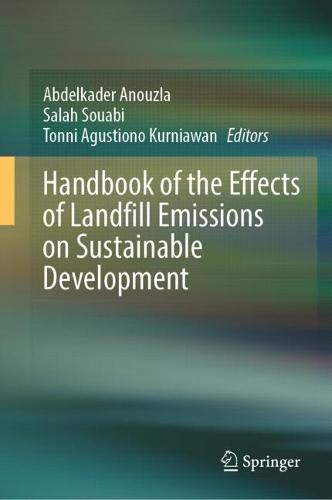
Handbook of the Effects of Landfill...
Hardback
$385.95 $308.92
Not in-store but you can order this
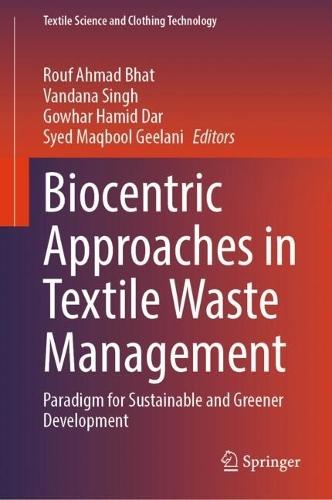
Biocentric Approaches in Textile...
Paradigm for Sustainable and Greener...
Hardback
$385.95 $308.92
Not in-store but you can order this
The Unknown Sea
The importance of the ocean for...
Paperback
$59.99
Not in-store but you can order this
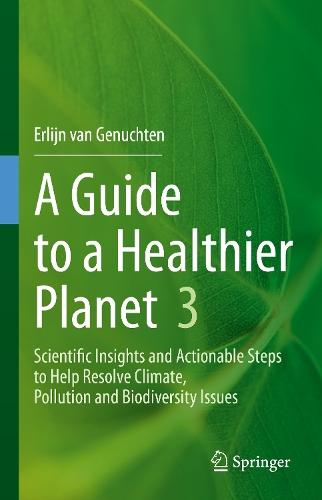
A Guide to a Healthier Planet 3...
Scientific Insights and Actionable...
Hardback
$96.95 $82.36
Not in-store but you can order this