Bargains! PROMOTIONS


Andrew Bartlett QC is based in London and is a highly rated international arbitrator with a wide range of experience in dispute resolution in numerous locations. He has a BA in Theology (University of Gloucestershire) and has served as an elder and a churchwarden in various churches.
Books on this topic can often be accompanied by the sound of an author steadily grinding an axe in the background. This work is refreshingly different. Meticulous research, careful argument, objective assessment and judicious evaluation make this a significant scholarly contribution to the discussion on the role of men and women in Christ’s church. It is essential reading for all in leadership. * Ian Coffey, Vice-Principal and Director of Leadership Training, Moorlands College, Dorset, UK * This is a major contribution to the debate on the place of men and women in Christian ministry. It breaks new ground and is an important read whatever view you hold. * Dr Michael Green, author and theologian * This is a must-read for anyone considering the Bible’s teaching on the roles of men and women. It has changed some of my thinking. Using his skills as an international arbitrator and his deep theological understanding, Andrew weighs up the biblical teaching on this often contentious issue. His conclusions are fresh, illuminating, and challenging to both egalitarian and complementarian alike. Every Christian leader and serious Bible student should read and digest this book. It will go a long way to bringing greater humility and unity on the subject, which is a great need in today’s church. * Michael Ots, evangelist, international speaker and author * Although I lean more towards a fully complementarian position, I want to commend this book because of its recognition of the importance of Scripture in Christian belief and practice, its desire to explain Scripture in its biblical context, its scholarly quality, and its promotion of good relationships between Christians who have divergent views, with objective assessment and without personal criticism. * Andrew Muwowo, founder, Proclamation Institute Zambia * This book’s consideration of male and female relations according to Scripture is a model of clarity, scholarship and summary. It is in every sense a judicious work, which helps to resolve some contentious issues of biblical interpretation. Its aim is thoroughly constructive: to promote mutual understanding and unity among those who believe in and wish to be faithful to Holy Scripture. * Dr Nigel G. Wright, Principal Emeritus, Spurgeon's College London, and former President, Baptist Union of Great Britain * Global communications are driving social change in East and South Asia. This increases the danger of importing Western theories unchallenged. I hope the insightful exegesis in this book will help Asian theologians and church leaders to engage with the Scripture without getting caught in the tramlines of the complementarian/egalitarian debate. * Anthony Harrop, former Publishing Consultant Asia-Pacific, United Bible Societies * In over 45 years of involvement in Bible translation I have frequently grappled with the interpretive issues dealt with in this book. Faithful translation should be accurate and unbiased, allowing the original text to speak for itself. This is the ideal, but translators are human. Cultural biases have affected English translations of texts concerning women. The author’s professional background helps him take a clear and refreshingly new look at the key texts. With careful scholarship and sound reasoning he resolves some important translation issues. I would recommend Bible translators take note of this book. * G. J. Dannenberg, Bible translation consultant for Turkic languages * This book is very thorough, leaving no stone unturned. Some of the ‘stones’ certainly needed to be turned! * Mike Wheate, formerly International Personnel Officer, Operation Mobilisation * As an arbitrator I look for careful assessment of evidence and contextually-sensitive reasoning. This book has both. * Dr Robert Gaitskell QC, international arbitrator * An important contribution to a debate on which all sides need to listen carefully to each other with humility and a shared commitment to Scripture. * Peter Baker, Senior Minister, Lansdowne Church, Bournemouth, UK * This thought-provoking and masterly analysis is also a thoroughly enjoyable read. * Marcus Taverner QC, London * If as evangelicals we are sometimes tempted to do our theology (and preach our sermons!) by proof-texting, I know of no better antidote than this book: Bartlett’s close attention to context transformed my understanding of several passages I thought I knew well. Drawing on his legal background and wide reading, and with absolute respect for the authority of Scripture, his careful scholarship has produced an analysis which is comprehensive, meticulous, and clearly expressed. What’s more, it is totally accessible to the interested layman, as it avoids technical terms and does not require knowledge of Greek – he explains what you need to know as you go along. * Revd Charles Mason, Priest in Charge of Waltham St Lawrence, Oxford Diocese * This is a landmark book on this key topic. It is extremely readable, yet an in-depth study. Unexpectedly I found it to be a page-turner, because I really wanted to know what was on the next page. Andrew Bartlett has a profound understanding of Scripture. This book has changed and clarified my own thinking. It should be read by all Christians, from new converts to archbishops. Wives, buy it for your husbands! Husbands, buy it for your wives! * Professor Sir Colin Humphreys CBE FRS FREng, author of ‘The Mystery of the Last Supper’ and ‘The Miracles of Exodus’ * Andrew Bartlett has carefully studied Scripture to offer a sound assessment of both the complementarian and egalitarian positions. Without advocating one over the other, he has presented very helpful principles to discern how men and women may best witness and serve together for God’s glory in each ministry context. * Ven. Wong Tak Meng, Archdeacon, Diocese of Singapore, Dean of Cambodia * This is a superb, cogent, precisely written and enjoyable book. Its author has endeavoured with considerable success to draw together a huge amount of material on a topic which all too easily leads to more heat than light. His qualifications in law perhaps lend themselves to a more objective reading of Scripture as he seeks to apply a judicial perspective to evaluating the material. His willingness to criticise both sides’ reasoning is noteworthy. Another real advantage of this book is that its key focus is ‘the biblical texts, in their context’. Ruthlessly centring on this results in a detailed exegesis of key texts which helps the reader to keep an eye on the ball, in what is a very large discussion. The book makes a real contribution to the debate. It also suggests some valuable new approaches to the evidence, not least on 1 Timothy 2. And chapter 16 (‘Taking stock and moving closer together’) should be required reading for anyone approaching this topic. Whether you consider yourself egalitarian or complementarian, this book will challenge, provoke and deepen your understanding of Scripture. * Paul Woodbridge, former Tutor in New Testament at Oak Hill College, London, Secretary of the Tyndale Fellowship * This is a stunning contribution to the debate about men and women in the church, for which I'm deeply grateful. The author’s determination to follow the evidence wherever it leads, based above all else on meticulous handling of the Bible, has blown apart my assumptions, resolved my uncertainties, transformed my thinking, and built new convictions. I pray that the Lord will use it to help evangelical churches align themselves more faithfully with Scripture. * Tony Watkins, speaker and writer on media and the Bible, recently an elder of Above Bar Church, Southampton (FIEC), now studying for a doctorate in practical theology * Andrew Bartlett’s magisterial study should be required reading for anyone exercising a teaching or leading ministry in any church. Every Bible student and ordinand should have it on their shelves as it is not just a book to read once but a resource showing how to rightly handle the word. With devastating thoroughness, he subjects some of the most challenging passages in Scripture to rigorous scrutiny to establish their true intent. He gives light to views from some illustrious predecessors in the faith which may make you wince in shame. He did not expect to arrive at some of his conclusions when he set out to write, and not everyone will necessarily agree with all of them, but as we spur one another on in our desire as men and women to be obedient as God’s redeemed image bearers, we will have our eyes opened and our lives blessed by yet more truth that shines from God’s holy word. * Rt Revd Keith Sinclair, Bishop of Birkenhead, UK * The treatment of 1 Corinthians 7 is the best I've come across. Very sound arguments. * Revd Kuruvilla Chandy, Trivandrum, Kerala, India * Many dedicated and talented Christian women look for creative and honest ways to follow their calling in a way that is consistent with the teaching of the Bible. This can be a painful and confusing struggle. Some go to work in secular fields because they feel they are not welcome to use their gifts in the church. This book is analytical, dialogical and honest. It helps spiritually gifted women to find their place. But the issues which it addresses are not important only for individual women. They have to do with the presence of God’s kingdom, missional effectiveness, and – last but not least – godly attitudes among all believers. * Dr Einike Pilli, Principal, Tartu Theological Seminary, Estonia * No matter what your current opinion, this thoroughly researched book will make you think... and brings a fresh perspective to the debate. -- Julia Garschagen * speaker and apologist *
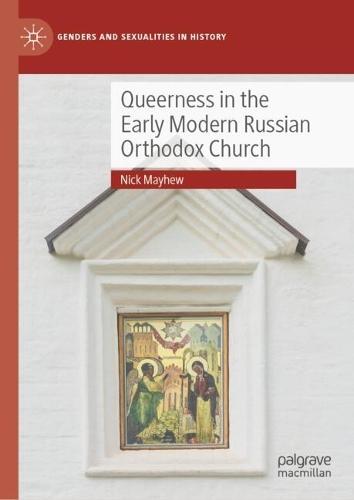
Queerness in the Early Modern Russian...
Hardback
$326.95 $261.21
Not in-store but you can order this
Burn the Boxes
Becoming Who God Has Called You...
Paperback
$34.95 $31.24
Not in-store but you can order this
The Pentecostal Gender Paradox
Eschatology and the Search for Equality...
Paperback
$59.99
Not in-store but you can order this
NIV, The Busy Mom's Bible, Leathersoft,...
Daily Inspiration Even If You Only...
Leather / fine binding
$59.99
Not in-store but you can order this
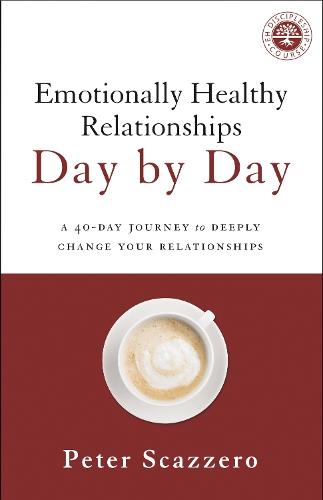
Emotionally Healthy Relationships...
A 40-Day Journey to Deeply Change...
Paperback
$22.99
Not in-store but you can order this