Bargains! PROMOTIONS


Kwok Pui-lan is Distinguished Scholar at Episcopal Divinity School and a past president of the American Academy of Religion. Ian T. Douglas is retired Bishop Diocesan of the Episcopal Church in Connecticut and former Angus Dun Professor of Mission and World Christianity at Episcopal Divinity School.
As a pastor situated in the two-thirds world, I wholeheartedly commend this audacious reimagining of Anglicanism. As always, Kwok Pui-lan and Ian T. Douglas have ably curated inputs from a diverse array of scholars from the Anglican community, to explore paths that transcend colonial legacies. This publication is a meaningful contribution to contemporary discourse, and will to pave the way to a genuinely polycentric and life-affirming Communion. * Thabo Makgoba, Anglican Archbishop of Cape Town, South Africa * Living Postcolonial Anglicanism is an eye-opening and thought-provoking examination of the colonial legacy of Anglicanism and its ongoing impact. This book, rich in historical analysis, serves as an invaluable resource for students, scholars, and anyone seeking to understand the evolving discourse on human rights and inclusion within the Anglican Communion. It is a timely and transformative read. * Akua Ofori-Boateng, Director of Programmes for the Anglican Diocese of Accra, Ghana * Living Postcolonial Anglicanism offers a clear elucidation of the historical motives, methods, and manifestations of the colonial agenda. The examples given of how churches contextualize the Anglican tradition provide opportunities for the entire Communion to learn how to live out a new, postcolonial Anglicanism and to find unity in our diversity. * Natalie Blake, United Theological College of the West Indies, Kingston, Jamaica * This is a very timely publication. As Anglican Communion structures are being debated, with proposals to make them less centered on the set of Canterbury and more reflective of the diverse nature of its member churches, these essays provide extensive theological commentary on and passionate advocacy of this trajectory. As with it’s widely read predecessor of 2001, Beyond Colonial Anglicanism, this volume will richly fulfil the editor’s hopes of catalyzing discussion that shapes ""our common dream for an embodied, pluralistic, and freeing postcolonial Anglicanism"". * Stephen Spencer, Anglican Communion Office and Durham University *
A Light Rising in the East
The Forgotten Tale of the First...
Paperback
$39.95 $34.26
Not in-store but you can order this
Hot Under The Collar
A Life in the Church
Paperback
$55.95 $47.60
Not in-store but you can order this
The Oxford Movement and the People...
Enslavement, Education, and Empire...
Hardback
$228.95
Not in-store but you can order this
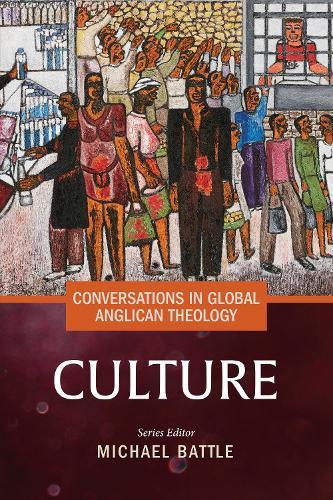
Conversations in Global Anglican...
Culture
Paperback
$54.99
Not in-store but you can order this
The Story of the Philadelphia Eleven...
Revised and Expanded 50th Anniversary...
Paperback
$52.99
Not in-store but you can order this