Beat the rise! Delivery fees are going up soon. INFO


Michael Guida is a cultural historian and a Research Associate in Media & Cultural Studies at the University of Sussex. His research concentrates on avian-human relations in modern urban Britain and recent published work has examined cultures of birdkeeping (in The Working Class at Home, 1770-1940, Palgrave) and birdsong and emotions (in The Routledge Companion to Animal-Human History).
"Of particular interest is Guida's account of Enham Village Centre (Hampshire), a model community established to help WW I veterans reintegrate into society through engagement in an idealized model of English life, where veterans lived and worked on crafts at a preindustrial pace. Alongside wartime nostalgia for a lost world of peaceful existence in nature, however, Guida recounts the emergence of the BBC's public service broadcasting, signifying ""the beginning of a new kind of national listening"" and modernity. * F. Krome, University of Cincinnati--Clermont College, CHOICE * In this sparkling book, Guida establishes himself as a preeminent listener of the past. Listening to British Nature is an important book, subtle in its telling and striking in its implications for our understanding of historical acoustemology. * Mark Smith, author of A Sensory History Manifesto * By cleverly weaving together themes of nature, war, and broadcasting, Guida offers us an exciting new way to listen to - and to understand - twentieth century Britain. His book is clearly the result of meticulous research and deep thought. But it's also infused with genuine compassion for the people and events it describes. This is history at its glittering, exhilarating best. * David Hendy, Emeritus Professor of Media and Cultural History, University of Sussex * Listening to British Nature, the cultural and social historian Michael Guida looks at the interconnected relationship of nature and modern life by focusing on evolving listening practices in the first half of the twentieth century. * Helen Piel, Isis *"
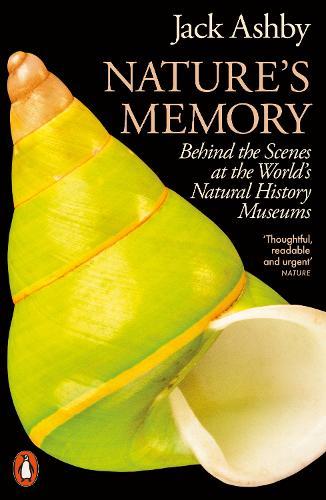
Nature's Memory
Behind the Scenes at the World’s...
Paperback
$28.99
Not in-store but you can order this
Threatened and Recently Extinct...
A Biogeographic Approach
Paperback
$175.95
Not in-store but you can order this
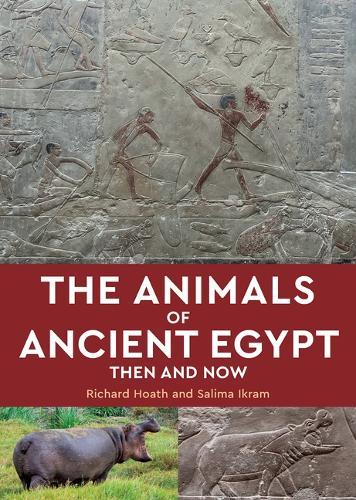
The Animals of Ancient Egypt
Then and Now
Paperback
$62.95
Not in-store but you can order this
The Ten Commandments in the Animal...
Paperback
$39.95 $34.21
Not in-store but you can order this