Beat the rise! Delivery fees are going up soon. INFO


Born to a Czech-French family in 1991, Maia Hruska was raised in Germany and now lives in London, working as a lawyer, like Kafka. She is fluent in Czech, French, German, and English. Kafkaesque is her first book.
'An elegant reflection on how the act of translation itself brings about Kafkaesque diversions … offers poignant reflections on the Europe of yesteryear and its legacy today' Times Literary Supplement ‘A bigger picture of Kafka's writing and its fateful journey through a hundred years in a dozen countries during a troubled century. It is a joyful and mind-opening read for everyone, not just Kafka experts’ Burhan Sönmez, author of Lovers of Franz K. and President of PEN International ‘A brilliant, fascinating book … Hrušková shows how, in the mid-1920s, ten authors fought to save Kafka’s works from the oblivion to which the Soviet and Nazi authorities had condemned them. It is both brilliant and relevant, erudite and highly accessible … It's not a long book, yet its breadth and depth make it feel like so much more’ Le Figaro ‘Many books have been dedicated to this Czech writer … this is one of the most interesting … Subtle and erudite, this captivating book is a literary panorama which follows Kafka across a century and several continents’ Lire Magazine ‘Dazzling … one fine day, you open a book by an unknown writer, and a charge of pure talent blows you away… It's a rare occurrence, even when you read for work. Dix Versions de Kafka is that gift that you don’t expect’ La Tribune ‘Examines the ‘Kafka question’ with finesse and erudition … this is unquestionably an important book about a universal literature’ L’Arche ‘Maïa Hrušková sets out along untrodden paths that it is astonishing no one has ever thought of taking before. She follows and retraces them like an explorer, with unparalleled intuition’ Analyse Opinion Critique ‘Is it surprising that Kafka’s work is experiencing such a craze among young people? [This book] has something of that youth about it: the zeal of not being afraid, and asking the right questions’ Revue des Deux Mondes
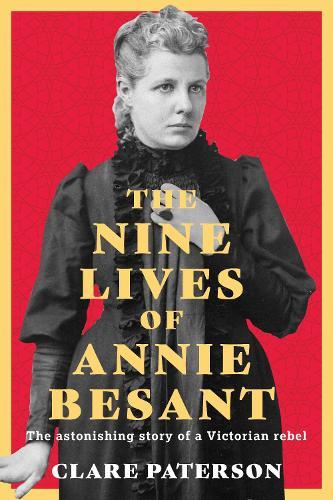
The Nine Lives of Annie Besant
The Astonishing Story of a Victorian...
Hardback
$54.99
In Stock 😊