Bargains! PROMOTIONS


Federica Gigante is Senior Research Fellow at the University of Oxford. She is a historian of the material and intellectual exchanges between the Islamic world and Europe in the early modern period. She received a PhD from the Warburg Institute and SOAS and held fellowships at I Tatti (The Harvard University Center for Italian Renaissance Studies), Anamed (Koç University Research Center for Anatolian Civilizations) and the Kunsthistorisches Institut in Florence. She currently leads a ERC-funded project on the role of slavery in the transmission of Islamic material culture and scientific knowledge in the early modern Mediterranean based at the Khalili Research Centre for the Art and Material Culture of the Middle East, at the University of Oxford. She was previously Research Associate in the History Faculty at the University of Cambridge. She worked for several years in a curatorial capacity at the University of Oxford, at the Ashmolean Museum first and History of Science Museum later, where she was in charge of Islamic scientific instruments.
A fascinating tour through the close study of one man's exceptional collections, its catalogues and a vast array of other archives, even down to tiny labels. Through the study of this rich material, Federica Gigante's beautifully written book illustrates the complex transmission, accumulation and transformation of knowledge surrounding Islamic objects - from dazzling art to small artefacts and manuscripts - as they travelled across the Mediterranean to Italy.--Filippo de Vivo, University of Oxford A tour de force of scholarship, this book is also a treasure trove of objects. Through the forensic examination of one collector's fascination with Islamic artefacts, Gigante offers a radically new perspective on commerce, craft and creativity in early modern Italy.--Mary Laven, Cambridge University This book is another milestone in disclosing histories of collecting in the age of Kunstkammer. Set between the Renaissance and the age of Enlightenment, this brilliantly-written study reveals the particular moments of collecting global scientific knowledge in the 17th-century city of Bologna, when marvels of nature and Islamic objects were archived and became the telling documents of the change in scope of the old world.--Avinoam Shalem, Columbia University
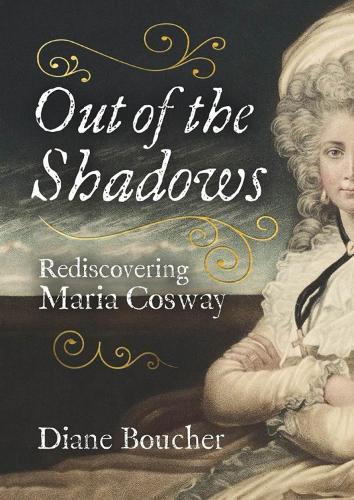
Out of the Shadows
Rediscovering Maria Cosway
Hardback
$74.99
Not in-store but you can order this
Drawing on Blue
European Drawings on Blue Paper,...
Paperback
$61.95
Not in-store but you can order this
The Monument’s End
Public Art and the Modern Republic...
Hardback
$59.99
Not in-store but you can order this
The Paston Treasure
Microcosm of the Known World
Hardback
$124.95
Not in-store but you can order this