Bargains! PROMOTIONS


Elad Hazan is Professor of Computer Science at Princeton University. His research focuses on the design and analysis of algorithms for basic problems in machine learning and optimization. He is a pioneer of online nonstochastic control theory. Karan Singh is Assistant Professor of Operations Research at Carnegie Mellon University, and has previously worked at Google Brain and Microsoft Research. He works on the foundations of machine learning, control, and reinforcement learning.
'We are in a golden age for control and decision making. A proliferation of new applications including self-driving vehicles, humanoid robots, and artificially intelligent drones opens a new set of challenges for control theory to address. Hazan and Singh have written the definitive book on the New Control Theory - non-stochastic control. The phrase 'a paradigm shift' has become cliche from overuse, but here it is truly well deserved; the authors have revisited the foundations by focusing on building controllers that perform nearly as well as if they knew future disturbances in advance, rather than relying on probabilistic or worst-case models. The non-stochastic control approach has extended one of the most profound ideas in mathematics of the 20th century, online (no-regret) learning, to master sequential decision making with continuous actions. This leads to high performance in benign environments and resilience in adversarial ones. The book, authored by pioneers in the field, presents both foundational concepts and the latest research, making it an invaluable resource.' Drew Bagnell, Carnegie Mellon University and Aurora 'As someone who has worked extensively on learning theory and online learning, and later applied these ideas in domains such as autonomous driving and humanoid robotics, I find this book both timely and inspiring. It introduces a regret-minimization framework for control that draws on the elegance and power of online learning. Traditional control theory often models noise either as stochastic-sometimes unrealistically optimistic-or adversarial-often overly conservative. This book charts a new path by asking a deeper question: while we cannot predict noise, can we perform nearly as well as if we could? The answer, developed here, is a novel and exciting paradigm that bridges learning theory and control, and I believe it will have a lasting impact on both research and practice.' Shai Shalev-Shwartz, Hebrew University of Jerusalem
Deep Learning on Embedded Systems...
A Hands-On Approach Using Jetson...
Hardback
$157.95
Not in-store but you can order this
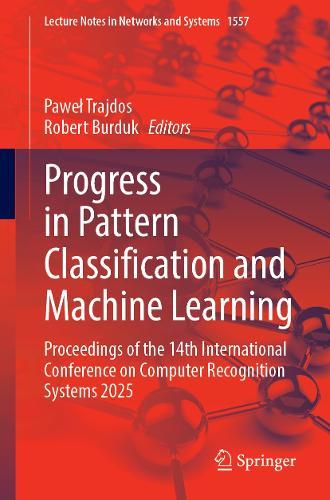
Progress in Pattern Classification...
Proceedings of the 14th International...
Paperback
$385.95 $308.92
Not in-store but you can order this
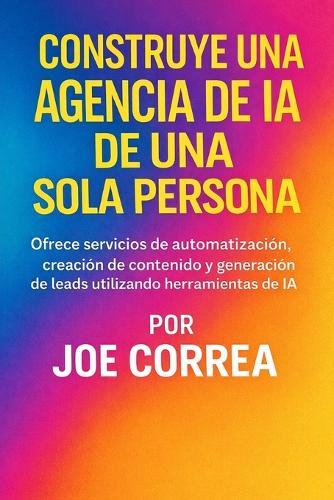
Construye una Agencia de IA de Una...
Ofrece servicios de automatización,...
Paperback
$35.95 $30.54
Not in-store but you can order this
Discover AI in the Real World
No Skill Needed to Demystify Machine...
Paperback
$34.95 $31.25
Not in-store but you can order this
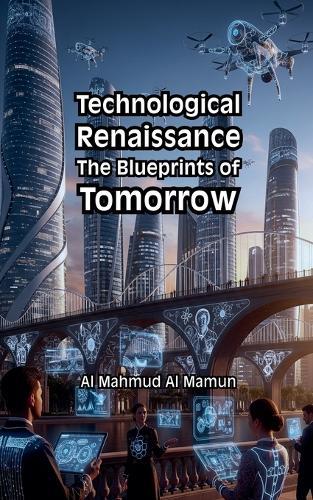
Technological Renaissance
The Blueprints of Tomorrow
Paperback
$80.95 $68.54
Not in-store but you can order this
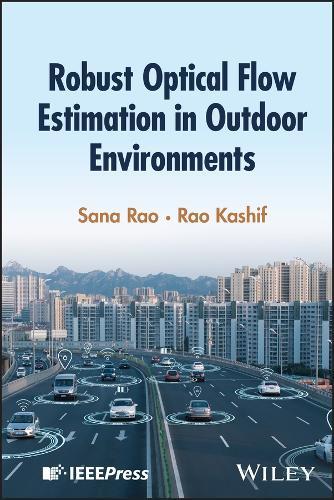
Robust Optical Flow Estimation in...
Hardback
$299.95 $239.56
Not in-store but you can order this