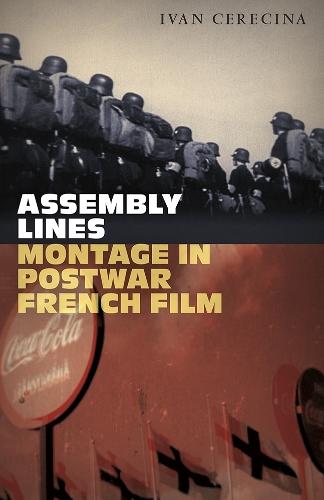
Bargains! PROMOTIONS


Bill Nichols is Professor Emeritus of Cinema at San Francisco State University. He is author of Representing Reality: Issues and Concepts in Documentary; Blurred Boundaries: Questions of Meaning in Contemporary Culture; Engaging Cinema: An Introduction to Film Studies; and Speaking Truths with Film: Evidence, Ethics, Politics in Documentary. He is also editor of Movies and Methods, Volumes I and II.Jaimie Baron is Lecturer in Film and Media Studies at the University of California, Berkeley. She is author of The Archive Effect: Found Footage and the Audiovisual Experience of History and Reuse, Misuse, Abuse: The Ethics of Audiovisual Appropriation in the Digital Era as well as many journal articles, book chapters, essays, and reviews. She is founder and director of the Festival of (In)appropriation, a yearly international festival of short experimental found-footage films and videos. She is also a cofounder and coeditor of Docalogue, an online space for scholars and filmmakers to engage in conversations about contemporary documentary, and the Docalogue book series. She is a 2022–23 recipient of a Harvard Radcliffe Fellowship.
""Since its first edition in 2001, Bill Nichols' Introduction to Documentary is the leading textbook on nonfictional cinema. Not exactly a how-to-do guide, a history of documentaries, or an assessment of the specific ethical and aesthetic issues of this production, Nichols's book became an instant classic discussing all of this with clarity and originality for the beginner and the academic, the filmmaker and the viewer. Each part organically updated with new questions and filmic variations, its fourth edition, co-written with Jaimie Baron, offers an even more complex and current approach to the essential book that has been guiding us through the mist of documentary film.""—Amir Labaki, author of Introduction to Brazilian Documentary ""In Introduction to Documentary, Bill Nichols created the first comprehensive taxonomy of documentary film form—one that has given generations of students and scholars a critical language with which they can critically analyze and understand the many complex forms of documentary film. This fourth edition, now joined by scholar Jaimie Baron, uses the latest films from mainstream to the avant-garde to analyze ever-evolving documentary film practices in relation to recent theoretical debates including relationships between fact and fiction, the ethics of representation, point of view, new technologies, and hybrid forms. Written with clarity and generosity, the volume is an essential resource for film and media students, scholars and filmmakers alike.""—Jeffrey Skoller, editor of Postwar: The Films of Daniel Eisenberg
River Delta Futures
Endangered Communities in Audiovisual...
Hardback
$180
Not in-store but you can order this
New Arctic Cinemas
Media Sovereignty and the Climate...
Paperback
$49.95
Not in-store but you can order this
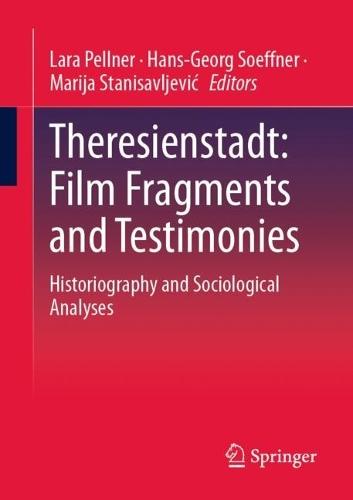
Theresienstadt
Film Fragments and Testimonies:...
Paperback
$221.95 $177.72
Not in-store but you can order this
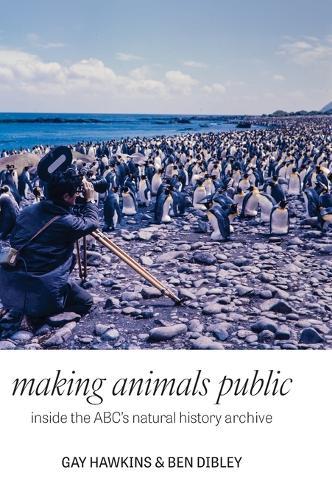
Making Animals Public
Inside the ABC’s natural history...
Hardback
$91.95 $77.89
Not in-store but you can order this
Listening to Others
Eduardo Coutinho's Documentary Cinema...
Paperback
$89.95 $76.76
Not in-store but you can order this