Beat the rise! Delivery fees are going up soon. INFO


Peter Muntigl is currently Visiting Professor at Ghent University and Adjunct Professor at the Faculty of Education, Simon Fraser University. He is an Associate Editor for the Journal Frontiers (Psychology for Clinical Settings).
'Peter Muntigl has written an original, comprehensive and most insightful analysis of interactional practices in Emotion Focused Psychotherapy. This is a milestone of research, and essential reading for psychotherapy practitioners.' Anssi Peräkylä, Academy Professor, Faculty of Social Sciences, University of Helsinki 'A lively and very welcome overview of what conversation in analysis can offer the understanding of psychotherapy. Muntigl gives a clear-eyed and expert account of how talk establishes, threatens, and repairs the crucial pivot of therapy: the relationship between therapist and client.' Charles Antaki, Loughborough University 'I think this is a brilliant book on an important contemporary form of humanistic-experiential psychotherapy (Emotion-Focused Therapy): it will change how you perceive the process of psychotherapy. The sheer range of EFT processes covered (empathy, narrative, chair work, extended disaffiliation, i.e., 'rupture' episodes) is truly impressive. The transcribed segments really capture the lived quality of the sessions and opened my eyes to whole sets of in-session processes. This book is not an easy or a light read. However, I found it more than repaid the effort: I read it carefully, learning to read the transcripts like musical scores, savoring 2 to 4 pages each day. I was sad when it ended but felt that it had changed how I see a therapy that I have been practicing for more than 30 years.' Robert Elliott, Professor Emeritus of Counselling, University of Strathclyde & Professor Emeritus of Psychology, University of Toledo 'Muntigl's book offers a valuable contribution by demonstrating how psychotherapy is accomplished through a series of ongoing talk sequences and interactions. It challenges static definitions of the concepts of affiliation and disaffiliation, illustrating their sequential accomplishment during psychotherapeutic interactions. Through his analyses, Muntigl offers a refreshing perspective on how psychotherapy is carried out and how desired therapeutic outcomes are accomplished. Furthermore, by highlighting the sequential accomplishment of affiliation and disaffiliation, discussions in this book also provide practical insights into how therapeutic interventions can be improved through addressing moment-to-moment interactions.' Stephanie Ng, Language in Society
Cognition and Conspiracy Theories...
Paperback
$60.95 $51.51
Not in-store but you can order this
Looking Ahead
The New Science of the Predictive...
Paperback
$97.95 $83.57
Not in-store but you can order this
The Neuroscience of Word Meaning...
Paperback
$106.95 $85.22
Not in-store but you can order this
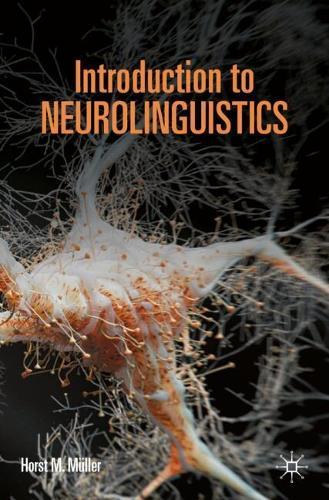
Introduction to Neurolinguistics...
Paperback
$176.95 $141.94
Not in-store but you can order this
Unpacking Creativity
The Power of Figurative Communication...
Paperback
$81.95 $69.63
Not in-store but you can order this