Bargains! PROMOTIONS


Matthew S. Erie (J.D., Ph.D.) is an associate professor of law at the American University Washington College of Law and a member of the University of Oxford Law Faculty. He practiced law in Beijing and New York City before entering academia. A comparativist and anthropologist by training, he has taught law in the United States, United Kingdom, Singapore, Cambodia, Pakistan, and China. Ching-Fu Lin is Professor and Director at Institute of Law for Science and Technology, National Tsing Hua University, Taiwan. Trained as both a lawyer and an engineer, he teaches international law and global governance, law and technology, global health law, food law and policy, and artificial intelligence law and policy.
'Comparative law was long done among, and with, European (and US) laws; Asia was merely an 'other'. This book – coedited by two eminent experts, and written by Asian scholars – provides an antidote to Eurocentrism and Asian essentialism. It shows Asian law in its multitude, and comparative law at its best. Ralf Michaels, Director, Max Planck Institute for Comparative and International Private Law 'Asian jurisdictions are learning from each other-an insight with profound implications for our multipolar world, where the simple acceptance of Euro-American legal systems as the 'core' of legal modernity and the rest as 'periphery' is collapsing. This book provides us with a timely resource to think beyond existing paradigms.' Sarah Biddulph, Professor of Law and Director of Asian Law Centre, Melbourne Law School 'Erie and Lin's elegantly theorized volume breaks new ground in postulating alternative frames for legal modernity. Through the framework of 'Inter-Asian Law,' the distinguished contributors map new legal formations that draw from domestic insights informing regional legal developments and transnational legal orders. A timely and important work deserving wide readership.' Shahla Ali, Professor, Hong Kong University Faculty of Law 'Inter-Asian Law takes a new approach to comparative law. The chapters highlight the positive contributions of the region's main players to modern international legal structures and the evolution of legal thought, making the book a fascinating next step in a comprehensive understanding of our legal future.' Krista Nadakavukaren Schefer, Vice Director and Co-Head of the Legal Division, Swiss Institute of Comparative Law 'There is a 'what if' question underlying the book. It studies episodes in the past or present to illuminate the future. Observing that Inter-Asian Law (IAL) is in its infancy, it suggests trajectories which IAL can take. The book invites us to take an 'imaginative' legal leap to addressing the pressing concerns of today's Asia.' Anselmo Reyes, International Judge, Singapore International Commercial Court 'Superbly conceptualized, this volume not only outlines an original methodology for studying Asian law, but applies and develops it through illuminating studies of many different areas of law. This is a valuable and pioneering work.' Antony Anghie, Professor, National University of Singapore and University of Utah
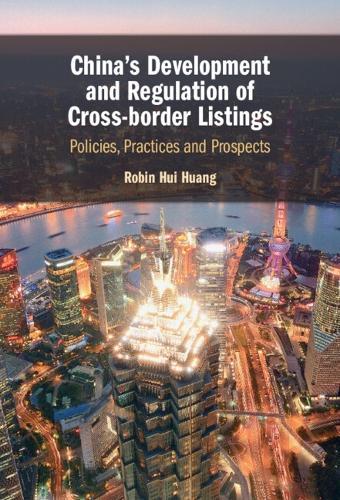
China's Development and Regulation...
Policies, Practices and Prospects...
Hardback
$378.95 $303.01
Not in-store but you can order this
The Rise of Constitutionalism
A Global Perspective
Hardback
$200
Not in-store but you can order this
Delisting of Stock Corporations...
Rationales, Forms, and Perspectives...
Hardback
$240
Not in-store but you can order this
Buyers’ Remedies in International...
A Comparative Study
Paperback
$84.99
Not in-store but you can order this
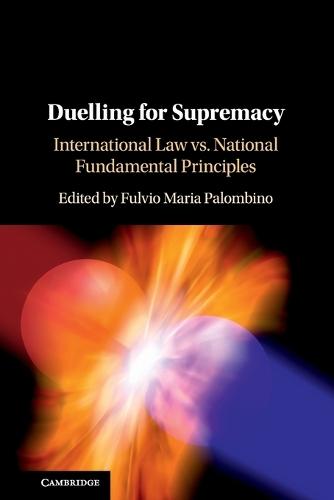
Duelling for Supremacy
International Law vs. National Fundamental...
Paperback
$92.95 $79.39
Not in-store but you can order this