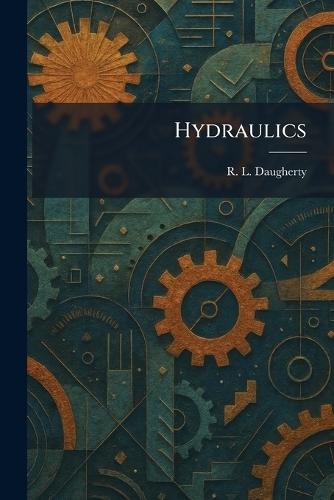
""Hydraulics and the Mechanics of Fluids"" serves as a comprehensive and rigorous introduction to the fundamental principles governing fluid behavior. Written for students and practicing engineers, this work delves into the essential laws of hydrostatics and hydrodynamics, providing a solid theoretical foundation coupled with practical applications. The text covers a broad spectrum of topics, including the properties of liquids, Bernoulli's theorem, and the mechanics of flow through pipes, orifices, and notches.
Detailed attention is given to the practical aspects of hydraulic machinery, such as water wheels, turbines, and pumps, illustrating the transformation of fluid energy into mechanical work. The author meticulously explores concepts of viscosity, friction, and the impact of jets, ensuring a thorough understanding of how fluids interact with various surfaces and conduits. With its clear explanations and mathematical precision, this book remains a significant resource for understanding the mechanics of fluids and the engineering challenges associated with hydraulic systems. Its systematic approach makes it an invaluable reference for those seeking to master the complexities of fluid motion and pressure in various engineering contexts.
This work has been selected by scholars as being culturally important, and is part of the knowledge base of civilization as we know it. This work was reproduced from the original artifact, and remains as true to the original work as possible. Therefore, you may see the original copyright references, library stamps (as most of these works have been housed in our most important libraries around the world), and other notations in the work.
This work is in the public domain in the United States of America, and possibly other nations. Within the United States, you may freely copy and distribute this work, as no entity (individual or corporate) has a copyright on the body of the work.
As a reproduction of a historical artifact, this work may contain missing or blurred pages, poor pictures, errant marks, etc. Scholars believe, and we concur, that this work is important enough to be preserved, reproduced, and made generally available to the public. We appreciate your support of the preservation process, and thank you for being an important part of keeping this knowledge alive and relevant.