Beat the rise! Delivery fees are going up soon. INFO


Mia Spizzica has taught at the University of Siena in Italy, the University of Melbourne, and RMIT University in the Humanities and Social Sciences. She is a Melbourne Museum Research Associate. Her PhD at Monash University has focused on the internment of Italians in Australia.
Hidden Lives is a valuable addition to Italian Diaspora history, joining Una Storia Segreta (USA) and Enemies Within (Canada) to tell the stories of those immigrants who experienced detention during World War Two as enemy aliens in these allied nations. The combination of emotionally charged personal narratives and well-researched scholarly essays create new history, one that fills a long neglected void in Italian Diaspora Studies, enabling us all to know now what few knew, and even fewer talked about, then. - Fred Gardaphe, Distinguished Professor of Italian/American Studies Queens College, City University of New York Hidden Lives offers new, accessible insights on a significant period in Australia's history. But beyond mere historical account, it urges the reader to consider these events in light of modern Australia's ongoing debates about multiculturalism, refugees, defence, and political leadership. - Susan Carland, Director, Bachelor of Global Studies, Monash University Not many of those Italians, Germans and Japanese that suffered unjustly during that terrible period of world history are amongst us today, but their stories and the memory of those events need to be told and retold. These stories need to be told because history needs to be set right; it needs to be told to do justice to those that were caught in the vortex of war and became victims of 'nationalistic' hysteria; their stories need to be told in the hope that we will not repeat these atrocities to new events and to other communities presently or in the future. - Joseph A Caputo OAM (JP), Hon. President, Federation of Ethnic Communities Councils of Australia The first-hand testimonies will not fail to move all who read Spizzica's volume, which reveals the extent of the travesty of wartime policies. - Catherine Dewhirst, University of Southern Queensland
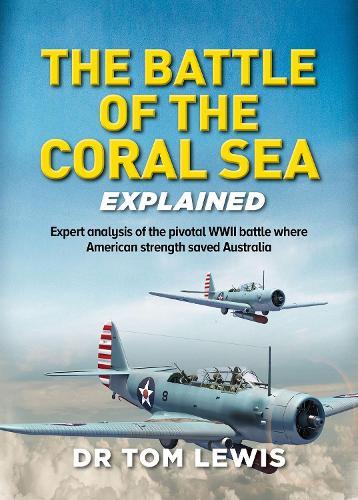
The Battle of the Coral Sea Explained...
Expert Analysis of the Pivotal WWII...
Paperback
$39.95
In Stock 😊