Beat the rise! Delivery fees are going up soon. INFO


Dr Komal Agrawal has received her BSc and MSc in Microbiology from the University of North Bengal and Sikkim University (A Central University) respectively. In 2021 she received her PhD from the Department of Microbiology, Central University of Rajasthan, India. She is currently working as Assistant Professor in Department of Microbiology, at Lovely Professional University, India. The research specialization is focused on mycology, enzymology, laccase, bioremediation, proteomics, and designing bio-based applications based on environmental sustainability. The work has resulted in publications of research articles and review papers. Further, in 2023 she has been recognized within the Standford list of the top 2% of scientist globally and was also awarded the Aditi Pant Women Scientist Award 2023 at the ICMBSDG 2023. She has also contributed in several book chapters covering diverse domains. Alongside involvement in the laboratory and collaborations has resulted in the co-authored publication as well. Pradeep Verma is currently the Group Leader at the Bioprocess and Bioenergy Laboratory, Department of Microbiology, at the School of Life Sciences in Central University of Rajasthan (CURAJ). He is a distinguished fellow of several professional organizations, including the Mycological Society of India (MSI Fellow, 2020), the Biotechnological Research Society of India (BRSI Fellow, 2021), and the Association of Microbiological Sciences, India (AMSc, AMI, India, Fellow, 2021). He is the recipient of the Prof. P.C. Jain Memorial Award, by the Mycological Society of India (PCJ-Memorial Award, 2021) and also the recipient of the Ron Cockcroft Travel Award by the Swedish Society, Sweden (2005) In addition, he received the Bridge Fellow JSPS Award in 2022 and conducted joint research work at Kyoto University in Japan. Recently, he was also nominated as a fellow of the International Academy of Wood Sciences (IAWS Fellow 2024), Fellow of the National Academy of Biological Sciences (NABS Fellow 2023) and Fellow of the Association of Fungal Biologist (AFB Fellow 2023). His areas of expertise include microbial diversity, bioremediation, bioprocess development, lignocellulosic, and algal biomass-based biorefineries. He holds several national and international patents in the field of microwave-assisted biomass pretreatment and bio-butanol production. Dr. Maulin P. Shah is a distinguished environmental scientist, academician, and globally recognized expert in the fields of environmental biotechnology and sustainable wastewater treatment. He has made significant contributions to advancing eco-friendly technologies for pollution control, particularly through innovative biological treatment processes. Dr. Shah holds extensive academic and research experience, with a strong focus on industrial wastewater treatment, bioremediation, and microalgae-based technologies. His work emphasizes the integration of sustainability principles with practical engineering solutions, helping industries reduce their environmental footprint. Remarkably, Dr. Shah has edited over 300+ books covering a wide spectrum of cutting-edge domains, including industrial wastewater microbiology, bioremediation, biodegradation, algal biotechnology, biofuel, bioenergy, circular economy, metagenomics related to wastewater treatment, and enzyme engineering. This exceptional editorial contribution reflects his deep expertise and unparalleled commitment to advancing global knowledge in environmental science. Over the years, he has also authored and contributed to numerous high-impact research papers and scholarly books published by reputed international publishers. His publications are widely cited and serve as essential references for researchers, academicians, and industry professionals worldwide. He is actively associated as an Editorial Board Member in more than 30 high-reputed international journals affiliated with leading organizations and publishers such as International Water Association, American Chemical Society, Royal Society of Chemistry, Elsevier, Springer, Taylor & Francis, Wiley, IOP Publishing, Apple Academic Press, Scrivener Publishing, and Bentham Science Publishers. His extensive editorial involvement highlights his leadership and recognition in the global scientific community. Dr. Shah is widely recognized for his collaborative research with leading scientists across the globe, promoting interdisciplinary solutions to complex environmental challenges. His work effectively bridges the gap between fundamental research and real-world industrial applications. In addition to his research excellence, he has been invited as a keynote speaker at numerous national and international conferences, where he shares valuable insights on sustainable development, wastewater management, and environmental innovation. He is also deeply committed to mentoring students and young researchers, fostering academic growth and inspiring future leaders in environmental science and engineering. Beyond academia, Dr. Shah contributes to industry-oriented solutions and policy- relevant research aimed at environmental protection, resource recovery, and sustainable development. Through his relentless dedication and visionary approach, Dr. Maulin P. Shah has established himself as a leading authority in environmental sustainability, committed to building a cleaner, greener, and more sustainable future.
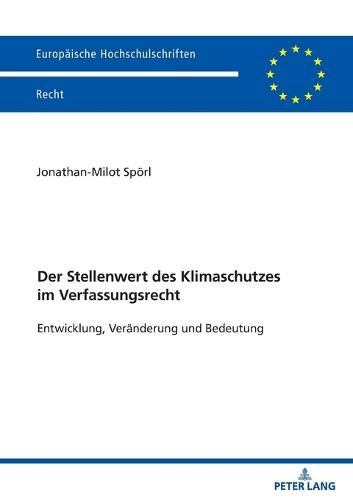
Der Stellenwert des Klimaschutzes...
Entwicklung, Veraenderung und Bedeutung...
Paperback
$78.95 $66.69
Not in-store but you can order this
Agricultural Experiment Station...
Hardback
$107.95 $86.34
Not in-store but you can order this
Taming the Four Horsemen
Radical solutions to defeat Pandemics,...
Paperback
$36.95 $31.40
Not in-store but you can order this