Beat the rise! Delivery fees are going up soon.


Joseph Gamache is Associate Professor of Philosophy at Marian University Indianapolis, Indiana, USA.
Jospeh J. Gamache has produced a first rate work of scholarship with this comparative study of F.H. Bradley and Gabriel Marcel. Drawing on the fact that both thinkers corresponded with each other, sharing similar themes and somewhat similar sensibilities, the author illustrates how studying both thinkers in relation to each other greatly illuminates their respective ideas. With its close reading of key texts, probing analysis of such themes as idealism, personalism, and relation, along with the fascinating connection between thought and reality, Bradley and Marcel scholars, along with those interested in their rich intellectual milieu, cannot afford to ignore Gamache’s penetratingly fresh perspective on these two important thinkers and their profound insights into foundational questions. -- Brendan Sweetman * Professor of Philosophy, Rockhurst University * Joseph Gamache’s Gabriel Marcel and F. H. Bradley: Enemies of Abstraction is a joy to read. He brings to light a dialogue that has been undeservedly neglected and in so doing produces genuinely new scholarship. The fruits of the dialogue between the French philosopher Gabriel Marcel and the British philosopher F.H. Bradley are made possible by Gamache’s exquisite ability to make complex thought accessible. Few writers compare in bringing metaphysics to earth. In reference to Gamache’s interlocuters, Bradley provides metaphysical insight into Marcel’s experiential philosophy, while Marcel illuminates the existential consequences of Bradley’s metaphysics. The result is a personalism that avoids both individualism and idealism. While idealism includes the individual but at the cost of personal experience, individualism is inadequate to capture the self who is a participatory being. This dual rejection is explored via meditations on truth, feeling, abstraction, the nature of self-knowledge, identity, and the body, with a final reflection on the Absolute and love. The journey concludes with Bradley and Marcel drawn together in their shared rejection of abstraction and their willingness to make lived experience the focal point of philosophy. -- Geoffrey Karabin * Assistant Professor of Philosophy, Neumann University *
Classical Indian Philosophy
A history of philosophy without...
Paperback
$29.95
Not in-store but you can order this
Making the Social World
The Structure of Human Civilization...
Paperback
$27.95
Not in-store but you can order this
Classical Indian Philosophy
A history of philosophy without...
Hardback
$69.95
Not in-store but you can order this
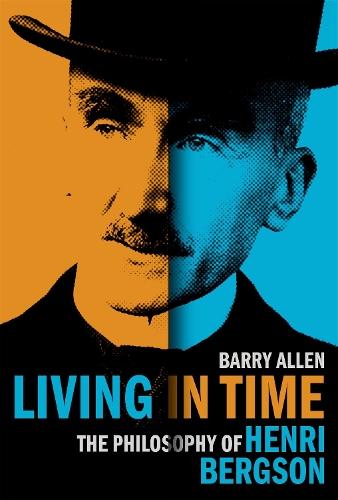
Living in Time
The Philosophy of Henri Bergson...
Hardback
$63.95
Not in-store but you can order this