PRIZES to win! PROMOTIONS


Somanath Tripathy received his PhD from IIT Guwahati in 2007. Currently, he is a professor in the Department of Computer Science and Engineering at the Indian Institute of Technology, Patna, where he has been a faculty member since December 2008. Prof. Tripathy has held significant administrative positions at IIT Patna, including Associate Dean of Academics (January 2016 - March 2017), Head, Computer Centre (November 2022-November 2023) and Associate Dean of Administration (July 2021 - November 2023). His research interests encompass Cybersecurity, Malware Detection, Secure Machine Learning, Lightweight Cryptography, and Blockchain. Tripathy holds two patents and has published over 130 research papers in reputed journals and conferences. He has led several projects as Principal Investigator, notably his team developed a malware detection app presented to the Bureau of Police Research and Development (BPRD) and the Ministry of Home Affairs (MHA) as part of a sponsored project. Tripathy is currently an editor of the IETE Technical Review and an associate editor of the journal Multimedia Tools and Applications. Harsh Kasyap is an Assistant Professor in the Department of Computer Science and Engineering at the Indian Institute of Technology (BHU), Varanasi, India. He is also an honorary research fellow at WMG, University of Warwick, UK. Prior to that, Harsh was a Research Associate, working in the Alan Turing Institute London, where he established significant research collaborations with the HSBC, Bank of Italy and TNO, advancing the fields of data privacy, AI security and fairness. He obtained his Ph.D. from the IIT Patna, India. His Ph.D. thesis title was “Security and Privacy Preserving Techniques for Federated Learning”. His research interests are Federated Learning, Machine Learning Security, Trustworthy AI, Privacy and Data Security. Minghong Fang is a tenure-track Assistant Professor in the Department of Computer Science and Engineering at the University of Louisville. He was a Postdoctoral Associate in the Department of Electrical and Computer Engineering at Duke University from 2022 to 2024. He received his Ph.D. degree from the Department of Electrical and Computer Engineering at The Ohio State University in August 2022. He has published several high-impact research papers in top-tier security conferences, including the USENIX Security Symposium, the ACM Conference on Computer and Communications Security (CCS), and the Network and Distributed System Security (NDSS) Symposium. Notably, his USENIX Security 2020 paper was selected as one of the “Normalized Top-100 Security Papers Since 1981”. His research interests broadly span various aspects of AI safety and security.
Image Segmentation
Principles, Techniques, and Applications...
Hardback
$228.95
Not in-store but you can order this
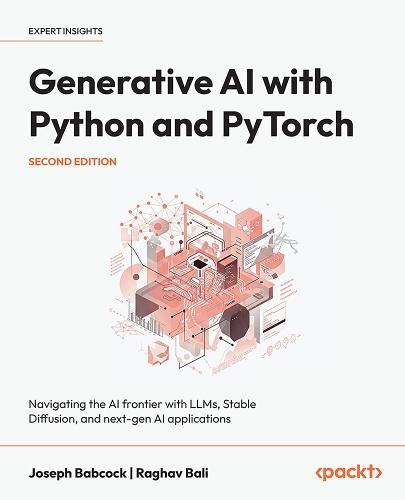
Generative AI with Python and PyTorch...
Navigating the AI frontier with...
Paperback
$124.95 $99.70
Not in-store but you can order this
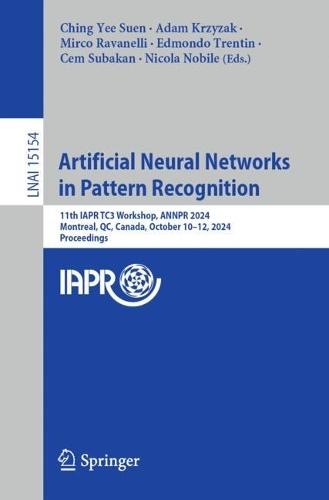
Artificial Neural Networks in Pattern...
11th IAPR TC3 Workshop, ANNPR 2024,...
Paperback
$162.95 $130.01
Not in-store but you can order this
Artificial Neural Networks and Machine...
33rd International Conference on...
Paperback
$162.95 $130.01
Not in-store but you can order this
A.R.G.E.O.N. & The Quantum Architect...
Paperback
$84.95 $72.21
Not in-store but you can order this
Optimization, Machine Learning,...
Theory, Algorithms, and Applications...
Paperback
$719.95 $575.84
Not in-store but you can order this