Beat the rise! Delivery fees are going up soon. INFO


George A. Brooks, PhD, is best known for developing the lactate shuttle theory and identifying the role of the mitochondrial reticulum in metabolism. He is a distinguished professor of integrative biology at University of California, Berkeley, where he has been teaching since 1971. He is a fellow of the American Physiological Society (APS), the American College of Sports Medicine (ACSM), and the European College of Sport Science (ECSS). Brooks was awarded the Walter B. Cannon Award lectureship in 2025 for his groundbreaking research. He was the keynote speaker at the 2025 American Physiology Summit. He has also earned the Honor Award designation from both the American College of Sports Medicine (2007) and the American Physiological Society's Exercise and Environmental Physiology Section (2014). Thomas D. Fahey, EdD, is a professor emeritus of California State University, Chico, where he received the Outstanding Professor Award. An avid masters track and field discus athlete, he was awarded a Lifetime Achievement Award/Lad Pataki Award (2018) as well as an Outstanding Masters Field Athlete (2008) from USA Track and Field. He retired from teaching in 2018 but not before working at UC Berkeley, Stanford University, and other institutions, including California State University, Chico, where he finalized his 50-year teaching career. He has continued to stay abreast of the research in the field and has authored or coauthored over 33 books. He has also written two personal trainer courses. Fahey was honored to be the doping control director for soccer at the Stanford venue for the 1984 Olympic Games in Los Angeles. A familiar face within the athletic community, Fahey is a four-time gold medalist at the World Masters Games. He earned medals in five consecutive world championships (spanning 20 years) and secured 11 straight national titles. Kenneth M. Baldwin, PhD, completed his doctorate in exercise physiology in 1970 under Charles Tipton at the University of Iowa. He finished postdoctoral training under John Holloszy at the Washington University School of Medicine in St. Louis. His research interests focused on exercise-induced biochemical and functional adaptations in heart and skeletal muscle. As one of the first faculty members recruited to the University of California, Irvine (UCI) School of Medicine, he played an important role in shaping the teaching, research, and governance of the school, known in the beginning as the California College of Medicine. He served as senior associate dean for academic affairs from 1989 to 1996. He served on the Space Studies Board of the National Academy of Sciences, overseeing research for animals and humans in space. He also organized a 2018 symposium for the National Academy of Sciences at their headquarters in Washington, D.C., to consider the formidable physiological challenges for space travel to and from Mars. He was honored by Springfield College with their Distinguished Alumnus award in 2016. He also received the American Physiological Society's Living History Award and UCI's Outstanding Emeritus Award in 2019. Regrettably, Dr. Baldwin passed away in October 2023.
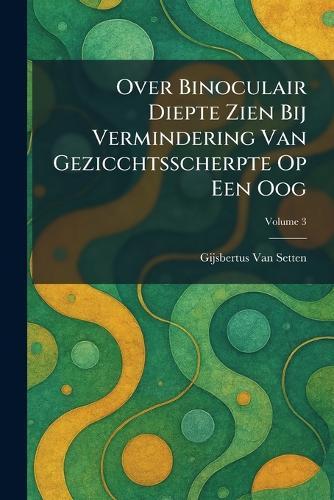
Over Binoculair Diepte Zien Bij...
Paperback
$44.95 $37.88
Not in-store but you can order this
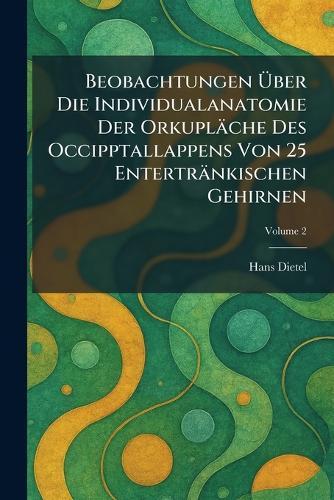
Beobachtungen Ãber Die Individualanatomie...
Paperback
$38.95 $32.99
Not in-store but you can order this
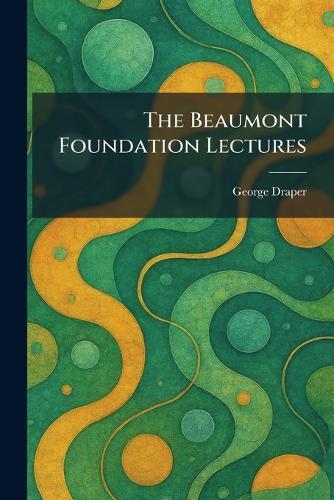
The Beaumont Foundation Lectures...
Paperback
$44.95 $37.88
Not in-store but you can order this
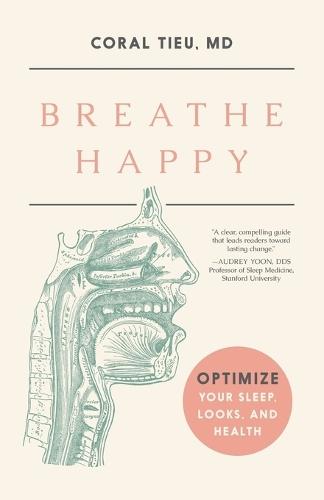
Breathe Happy
Optimize Your Sleep, Looks, and...
Paperback
$35.95 $30.59
Not in-store but you can order this