PRIZES to win! PROMOTIONS


Juan Núñez-Farfán has been a Professor at the Department of Evolutionary Ecology, Institute of Ecology, National Autonomous University of Mexico (UNAM), since 1993. He earned his PhD at UNAM (1991) and completed his postdoctoral studies at the Department of Organismic and Evolutionary Biology, Harvard University (1991-1993). He has been a Visiting Professor at the University of Connecticut (1999-2000), where he worked on plasticity with Professor C.D. Schlichting. Dr. Núñez-Farfán is currently investigating the ecological genetics of plant defenses against herbivores, particularly with the plant Datura stramonium, using population and quantitative genetics. He has served as Director of the Graduate Program in Biology at UNAM, and was the founder President of the Ecological Society of Mexico (SCME). He teaches evolution and quantitative genetics to undergraduate and graduate students. Pedro Luis Valverde received his Bachelor’s degree from the Metropolitan Autonomous University, Campus Iztapalapa (UAMI) in Mexico City, in 1990. Since 1992 he has been a faculty member at the Department of Biology, UAMI. He completed his Master of Science in Ecology and his Doctorate in Ecology at the National Autonomous University of Mexico (UNAM) in 1994 and 2001, respectively. From 2010 to 2012, he conducted research on natural selection and resistance to herbivores at the University of Seville, Spain. His chief research interests are in plant-animal interactions and the evolutionary ecology of plant defenses against herbivorous insects, as well as the reproductive biology and ecology of Cactaceae. Presently, Dr. Valverde is President of the Ecological Society of Mexico (SCME).
“The focus is on the areas of expertise of the authors—their research topics, systems, and approaches—giving the volume the feel of an enjoyable chat with an outstanding group of scientists. … This would be a great book for a graduate seminar, laboratory group, or anyone looking to cover a diversity of plant–herbivore topics. It is an enjoyable reminder of or introduction to how varied the field is.” (William C. Wetzel, The Quarterly Review of Biology, Vol. 96 (2), June, 2021)
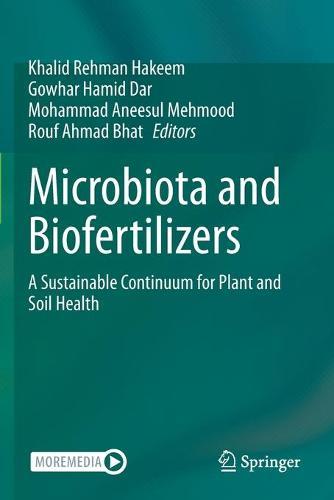
Microbiota and Biofertilizers
A Sustainable Continuum for Plant...
Paperback
$415.95 $332.78
Not in-store but you can order this
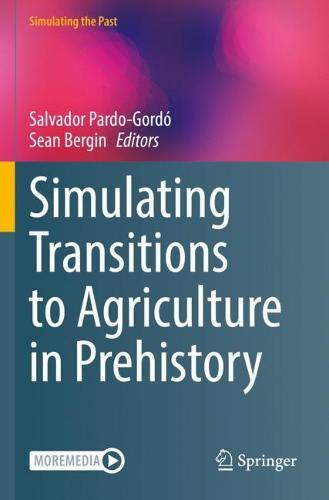
Simulating Transitions to Agriculture...
Paperback
$266.95 $213.50
Not in-store but you can order this
Invasive Species
A Very Short Introduction
Paperback
$21.95
Not in-store but you can order this
The Impact of Climate Change on...
Hardback
$370.95 $296.98
Not in-store but you can order this
Caterpillars in the Middle
Tritrophic Interactions in a Changing...
Paperback
$206.95 $165.78
Not in-store but you can order this