PRIZES to win! PROMOTIONS


William E. Cooper, Jr is Professor Emeritus of Biology at Indiana University-Purdue University Fort Wayne, and a Research Associate in the Department of Ecology and Evolution at University of Arizona. A behavioural ecologist by background, he has over thirty-five years of teaching and research experience in behaviour, ecology and evolution. He has specialised in escape behaviour for the past twenty years, with particular interest in reptilian behaviour. Daniel T. Blumstein is Professor and Chair of the Department of Ecology and Evolutionary Biology at the University of California, Los Angeles, and a Professor in UCLA's Institute of Environment and Sustainability. He has studied animal behaviour throughout the world, with research focusing on the evolution of social and antipredator behaviour and the effects that mechanisms of behaviour have on higher-level ecological processes and for wildlife conservation.
'This is essential reading for antipredator buffs.' Tim Caro, The Quarterly Review of Biology
Ecology and Conservation of Pinnipeds...
Paperback
$370.95 $296.98
Not in-store but you can order this
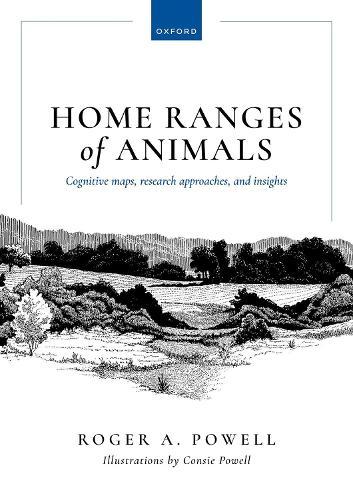
Home Ranges of Animals
Cognitive Maps, Research Approaches,...
Hardback
$287.95
Not in-store but you can order this
Blue-Green Infrastructure Across...
Improving Urban Resilience and Sustainability...
Hardback
$445.95 $356.62
Not in-store but you can order this
Blue-Green Infrastructure Across...
Improving Urban Resilience and Sustainability...
Paperback
$445.95 $356.62
Not in-store but you can order this