Bargains! PROMOTIONS


Prof. Dr. Mustafa Soylak is working on Environmental Analytical Chemistry, Nanotechnology, Nanomaterials, Nanocomposites, and Separation/ Preconcentration Techniques including Solid Phase Extraction, Coprecipitation, Cloud point extraction, membrane filtration, speciation and microextraction of trace organic and inorganic species. Dr. Soylak has an h-index of 111 (Web of Science). He has over 750 papers in Web of Science, 8 book chapters and reviews, two textbooks (in Turkish), and one textbook on microextraction techniques (Elsevier, 2020). He is the Editor-in-Chief of Comprehensive Sampling and Sample Preparation (Elsevier, 2022). He was a visiting professor at King Saud University- Saudi Arabia in 2010-2016 and at Near East University on 2018 to 2019. He is now a Professor at Erciyes University, Department of Chemistry, Kayseri-Turkey. He is the editorial board member of the Journal of Hazardous Materials, International Journal of Environmental Analytical Chemistry, Arabian Journal of Chemistry, Turkish Journal of Chemistry, and Journal of Nanostructure in Chemistry. He received TUBITAK (Turkish Scientific and Technological Research Council) Encouragement Award in 2001. He is the recipient of the highest prestigious science award in Turkey, the TUBITAK Science Award in 2020. He won also İlim Yayma Award from the İlim Yayma Foundation in 2021. He has been a principal member of the Turkish Academy of Sciences (TUBA) since 2020. He has obtained a TÜBİTAK 2247-A National Fellowship for Outstanding Researchers (2021). He published more than 750 research papers. Dr. Muhammad Saqaf Jagirani has distinguished himself in the field of nanomaterials and analytical chemistry through his prolific research career. Beginning at the National Center of Excellence in Analytical Chemistry at the University of Sindh, Pakistan, Dr. Jagirani concentrated his early efforts on the synthesis and application of gold nanoparticles for the detection of anti-cancer drugs. His work expanded to include the design and development of molecular and ion-imprinted polymers, alongside advanced nanomaterials aimed at addressing environmental challenges. This foundational work set the stage for his subsequent research endeavors. Currently, as a Postdoctoral Fellow at Dalian University of Technology in China, Dr. Jagirani is at the forefront of creating Metal-Organic Framework (MOF)-based nanocomposites with a focus on their photocatalytic applications. This line of inquiry is crucial for advancing sustainable technologies and environmental remediation efforts. Dr. Jagirani's expertise in the synthesis and application of nanomaterials is well-recognized in the scientific community, as evidenced by his extensive publication record, which includes 44 peer-reviewed articles and 7 book chapters. His work has garnered a notable H-index of 16, reflecting the significant impact and citation of his research within the field. In addition to his research contributions, Dr. Jagirani has played an active role in the academic community as an invited reviewer for eight national and international journals, further highlighting his expertise and recognition by his peers. With a decade of research experience, including three years at international institutions.
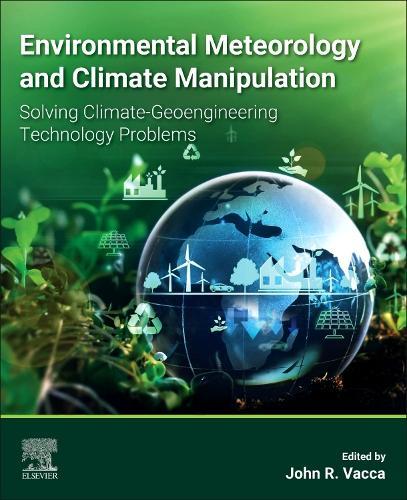
Environmental Meteorology and Climate...
Solving Climate-Geoengineering Technology...
Paperback
$344.95
Not in-store but you can order this
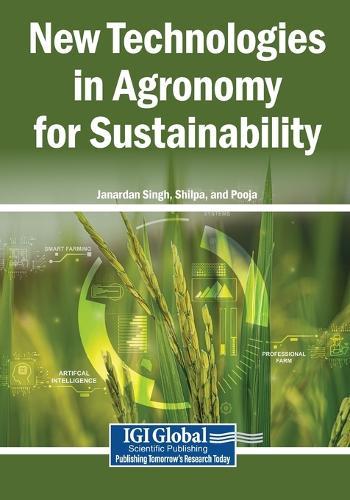
New Technologies in Agronomy for...
Paperback
$377.95 $302.29
Not in-store but you can order this
The Invisible Doctrine
The Secret History of Neoliberalism...
Hardback
$28.99
Not in-store but you can order this
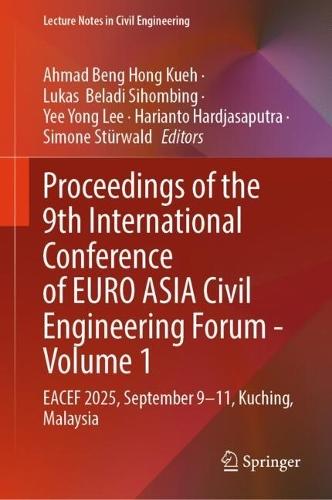
Proceedings of the 9th International...
EACEF 2025, September 9-11, Kuching,...
Hardback
$683.95 $547.46
Not in-store but you can order this
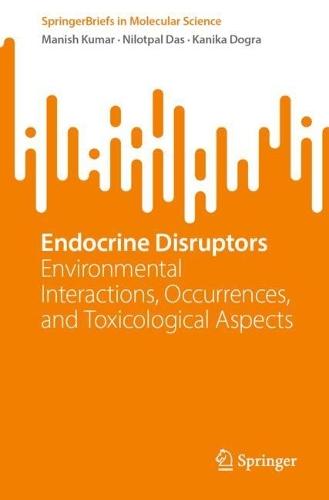
Endocrine Disruptors
Environmental Interactions, Occurrences,...
Paperback
$126.95 $101.37
Not in-store but you can order this
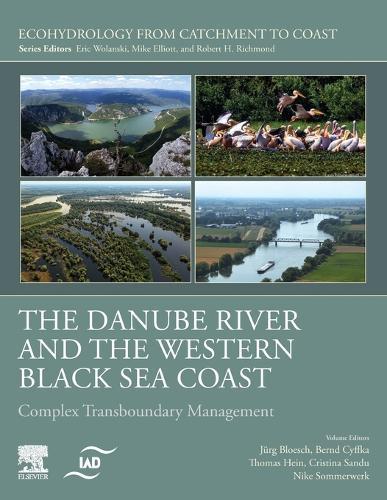
The Danube River and The Western...
Complex Transboundary Management...
Paperback
$286.95
Not in-store but you can order this