Bargains! PROMOTIONS


Margaret P. Calkins, Ph.D., is President of I.D.E.A.S. Inc. (Innovative Designs in Environments for an Aging Society), a consultation, education, and research firm dedicated to exploring the therapeutic potential of the environmenta social and organizational as well as physicala particularly as it relates to older adults who are frail and impaired. She is also Senior Fellow Emeritus of the Institute on Aging and Environmental at the University of Wisconsin-Milwaukee. Dr. Calkins holds degrees in both psychology and architecture. A member of several national organizations and panels that focus on issues of care for older adults with cognitive impairment, she speaks frequently at conferences nationally and internationally. She has published extensively, and her book Design for Dementia: Planning Environments for the Elderly and the Confused (National Health Publication, 1998) was the first comprehensive design guide for special care units for people with dementia. Dr. Calkins is Director and a founding member of SAGE (Society for the Advancement of Gerontological Environments), and has been a juror for numerous design competitions
A unique resource for health professionals who work with individuals with dementia. It combines content information, assessment tools, and practical tips and strategies in a format that is engaging and easy to read. Everyone from beginning clinicians to seasoned professionals will find this manual invaluable in managing patients with dementia and maximizing their functioning in everyday life. --Dr. Lyn Turkstra, Associate Professor Department of Communicative Disorders, University of Wisconsin-Madison (04/14/2014) [Here are] the long overdue tools needed by speech-language pathologists to determine the appropriate environmental cues for their clients with dementia to maintain a quality life in the nursing home. Thank you for this excellent resource. --Michelle Bourgeois, Ph.D., Professor Department of Speech and Hearing Science, The Ohio State University (04/14/2014) This toolkit is a must have, foundational resource for personalizing the environment while cultivating the possibilities that exist for human growth and meaningful relationships in dementia care settings.--Heidi Gil, Senior Director of Continuing Care Planetree (04/14/2014)
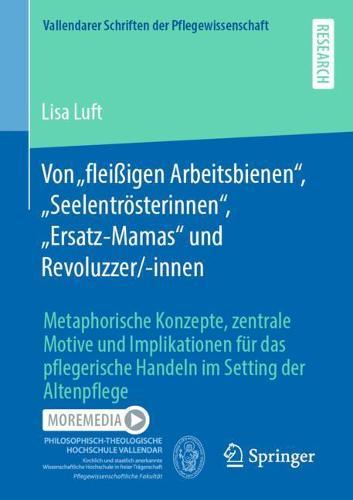
Von „fleißigen Arbeitsbienen“, „Seelentrösterinnen“,...
Metaphorische Konzepte, zentrale...
Paperback
$147.95 $118.08
Not in-store but you can order this
Corona und die Pflege
Denkanstöße – die Corona-Krise und...
Paperback
$162.95 $130.01
Not in-store but you can order this
Caregiver's Compass
Mastering the Art of Compassionate...
Paperback
$48.95 $41.87
Not in-store but you can order this
Dementia Painting
painting as therapy and as art
Hardback
$38.95 $33.32
Not in-store but you can order this