Bargains! PROMOTIONS


Muhammad Anshari is a researcher at Universiti Brunei Darussalam. Patricia Ordóñez de Pablos is a professor in the Department of Business Administration in the Faculty of Business and Economics at The University of Oviedo, Spain. She completed her education in The London School of Economics, UK. Her teaching and research interests focus on the areas of strategic management, knowledge management, organizational learning, intellectual capital and information technologies, with special interest in Asia (Bhutan, China, Myanmar). She is Editor-in-Chief of the International Journal of Learning and Intellectual Capital (IJLIC) and International Journal of Asian Business and Information Management (IJABIM), respectively. She has edited books for IGI Global, Elsevier, Routledge, and Springer. In 2021, 2022 and 2023, she earned placement on Stanford University’s “Ranking of the World Scientists: World’s Top 2% Scientists” list. Additionally she is listed in World Top Scientists of Research.com in the Areas of Social Science and Humanities in Spain and Engineering and Technology in Spain. Dr. Mohammad Nabil Almunawar is currently an associate professor at the School of Business and Economics, Universiti of Brunei Darussalam (UBDSBE), Brunei Darussalam. Hwe wasthe former dean of UBDSBE. He received his bachelor’s degree in 1983 from Bogor Agricultural University, Indonesia, master’s degree (MSc) from the Department of Computer Science, University of Western Ontario, London, Canada in 1991, and Ph.D in Computer Science/Information Systems from the University of New South Wales in 1998. Dr. Almunawar has published more than 100 papers in refereed journals, books, book chapters, encyclopedias, and international conference proceedings. He has more than 30 years of teaching experience in the area of information systems. His overall research interests include applications of IT in management, e-business/commerce, digital marketplace/platform, digital business ecosystem, health informatics, information security, and cloud computing. Currently, he focuses his research on digital transformation, digital marketplace, digital platform, and digital business ecosystem.
Incorporating Purpose
The New Legal Foundations for the...
Paperback
$53.95 $45.93
Not in-store but you can order this
Confronting the Bull Shark
Identifying and Preparing for Catastrophic...
Paperback
$94.95 $80.85
Not in-store but you can order this
Higher Ground
How Business Can Do the Right Thing...
Hardback
$55
Not in-store but you can order this
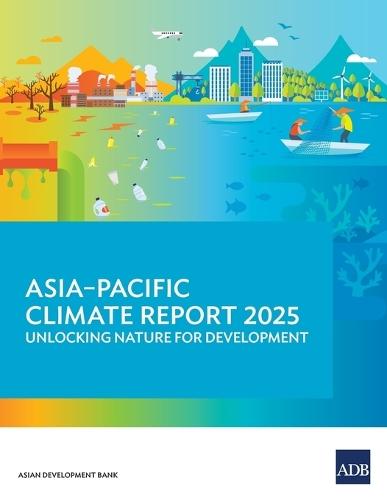
Asia-Pacific Climate Report 2025...
Unlocking Nature for Development...
Paperback
$72.95 $62.42
Not in-store but you can order this