PRIZES to win! PROMOTIONS


Matthias Fritsch (Edited By) Matthias Fritsch is Professor of Philosophy at Concordia University, Montréal. He is the author of The Promise of Memory: History and Politics in Marx, Benjamin, and Derrida and Taking Turns with Earth: Ways to Intergenerational Justice through Phenomenology and Deconstruction and co-translator of Heidegger's The Phenomenology of Religious Life. Philippe Lynes (Edited By) Philippe Lynes is Fulbright Canada Visiting Research Chair in Environmental Humanities at the University of California, Irvine. He is the translator of Derrida's Advances. David Wood (Edited By) David Wood is W. Alton Jones Professor of Philosophy at Vanderbilt University. His most recent book is Deep Time, Dark Times: On Being Geologically Human.
Ecology, in its semantic disposition, relates the oikos to the logos, two concepts that Derrida never stopped analyzing. Eco-Deconstruction affirms that in rich, diverse, and inventive ways, and repositions the now extensive work on Derrida and the animal within a broader context of planetary viability. Quite simply, the stellar contributions of this volume manifest a deconstruction that welcomes a whole new environmental space. -- David Wills * Brown University * Derrida has hailed ecology as a 'new dimension of living together. ' This was in 1998. Almost twenty years later, ecology is nothing new: It even risks already having surpassed itself in the sense of no longer having any specific domain. It is clear that ecology traverses all spheres of all existences. The Eco-Deconstruction undertaken in this volume means both an ecology of deconstruction (what is a disseminated oikos? a differing-deferring one? a prosthetic one? One will have to answer . . .) and also a deconstruction of ecology, thus of economy, ecopolitics, ecomythics, and ecosophy. -- Jean-Luc Nancy A terrific collection of essays penned by a stellar group of scholars, Eco-Deconstruction definitively demonstrates the continued relevance of deconstruction in our era of ecological disaster. More than a decade after Derrida's death, Eco-Deconstruction incisively shows us how the tools and concepts central to deconstruction are likewise crucial for thinking about today's pressing environmental problems (nature, life, animals, sustainability, the world, extinction, ecology). No mere echo chamber of agreement, Eco-Deconstruction likewise shows us where deconstruction can be helpfully supplemented with other approaches going forward into an uncertain ecological future. This is essential reading for anyone interested in environmental philosophy. -- Jeffrey Nealon * The Pennsylvania State University * Derrida's last seminars proved inspirational for the burgeoning field of animal studies, but the ecological tenor and wide-ranging environmental implications of his deconstructive approach has received much less attention. This timely, original, and extraordinarily innovative, collection of essays by many of the key thinkers in the field does much to rectify this. It will be an invaluable reference point for all those interested in the intersection of `continental' philosophy, literary criticism, posthumanism, and environmental concerns. -- Mick Smith * Queens University *
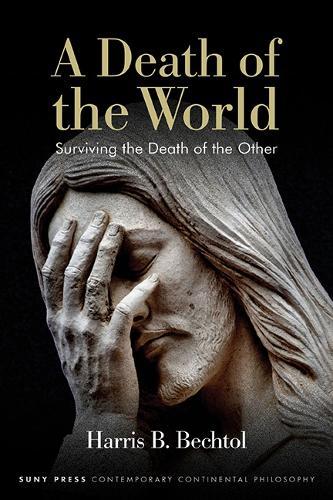
A Death of the World
Surviving the Death of the Other...
Paperback
$88.95 $75.28
Not in-store but you can order this
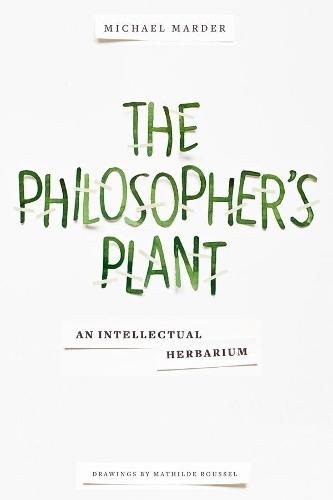
The Philosopher's Plant
An Intellectual Herbarium
Paperback
$42.95
Not in-store but you can order this
Poststructuralism
A Very Short Introduction
Paperback
$21.95
Not in-store but you can order this
Derrida Now
Current Perspectives in Derrida...
Hardback
$103.95
Not in-store but you can order this
The Transparency of Evil
Essays on Extreme Phenomena
Paperback
$17.99
Not in-store but you can order this
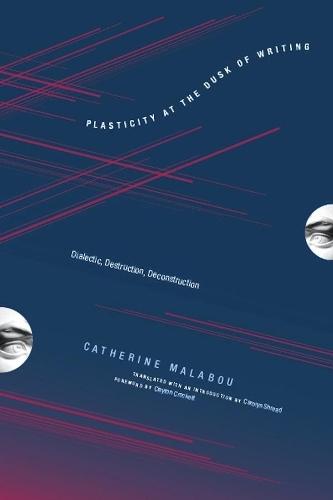
Plasticity at the Dusk of Writing...
Dialectic, Destruction, Deconstruction...
Hardback
$99.95
Not in-store but you can order this