Beat the rise! Delivery fees are going up soon. INFO


LESLIE R. CRUTCHFIELD is an author and a leading authority on scaling social innovation and high-impact philanthropy. She is a senior advisor at FSG, a nonprofit consulting firm specializing in social sector strategy, evaluation, and research. Her previous book, Forces for Good, was recognized in The Economist on its annual list of Top Business Books. JOHN V. KANIA is a managing director at FSG who oversees the firm’s consulting practice. John is a featured author of the book Learning from the Future, and he has been published in Stanford Social Innovation Review and the Wall Street Journal. He is a former partner of both Mercer Management Consulting and Corporate Decisions, Inc. MARK R. KRAMER is cofounder and a managing director at FSG, cofounder of the Center for Effective Philanthropy, and a Senior Fellow at Harvard University. Mark speaks and writes extensively on topics in philanthropy and corporate responsibility, and has been published in Harvard Business Review and Stanford Social Innovation Review.
"This how-to book examines the modern role of philanthropy, moving from merely ""giving away money"" to becoming ""active participants in the business of solving social and environmental problems."" The authors examine six practices donors can undertake to change the world, an admirable goal, but much of their message gets lost in muddy jargon: ""it is useful to think of collaboration as a spectrum of activity that ranges from loose coordination and informal information sharing to intense, focused collective impact campaigns"" (see Figure 5.1). The message itself, and the book's organization, however, are right on the money. Each chapter concludes with a summary of key principles covered and includes reminders of important points. Some of their real-life examples are especially illustrative, such as the story about a San Diego foundation that asked residents what they hoped for in their community and used funds to create an environment tailored to those desires and needs. Also fascinating is their look at ""adaptive leaders"" who learn to influence beyond their control, take on a higher profile, and engage with media, a type of leadership the authors endorse but warn is ""not for the timid...power hungry."" (Mar.) (Publishers Weekly, April 11, 2011)"
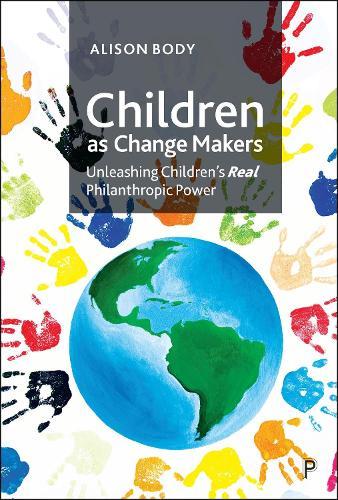
Children as Change Makers
Unleashing Children’s Real Philanthropic...
Paperback
$51.95
Not in-store but you can order this
A Century of Work for Animals
The History of the R.S.P.C.A., 1824-1924...
Paperback
$52.95 $45.23
Not in-store but you can order this
Graceful Leadership
Inspiring hope, creativity and resilience...
Paperback
$63.95
Not in-store but you can order this
The Charities of St. Vincent De...
An Evaluation of His Ideas, Principles...
Paperback
$55.95 $47.68
Not in-store but you can order this