Bargains! PROMOTIONS


Evelyn D. Ravuri is professor of Geography at Saginaw Valley State University, USA.
‘Ravuri’s book offers a fresh and innovative approach to understanding gentrification across 12 mid-size U.S. cities. By skillfully combining qualitative and quantitative data, Ravuri uncovers distinctive patterns and provides a nuanced analysis of racialized displacement. The book offers both broad trends and rich local context, making it essential reading for scholars, students, and anyone seeking to understand the complex dynamics of urban change in the United States.’ * Tanya Golash-Boza, University of California, USA * ‘Evelyn Ravuri’s work provides a highly informative historical and contemporary treatise of gentrification in U.S. cities. She enhances and extends gentrification discussions to include new and profound dimensions based on race/ethnicity and urban boundaries (compact versus sprawling) and includes a qualitative consideration. Evelyn uniquely examines commonalities of urban spaces, gentrification, and displacement by region (northeast, Midwest, south, and west). I highly recommend Evelyn’s book for anyone: academic / urban professionals, Jane Jacobs aficionados, American culture enthusiasts, and others will find her work to be a provocative, relevant, and highly relatable read, and will find her work on gentrification to be well-summarized, thought-provoking, and compelling.’ * Kevin N. Raleigh, University of Cincinnati, USA * ‘Utilizing a novel methodological approach that relies on both census data and Google Street View imagery, Displacing the “Ordinary” City provides new insights into the pattern and process of gentrification beyond the usual pantheon of large world cities. The author’s examination and comparative analysis of gentrification across 12 medium-sized U.S. metropolitan areas demonstrates that spatial patterns of displacement and reinvestment do not follow predictable regional lines, nor is this process necessarily accompanied by an increase in white population (as is often expected). Additionally, the author uncovers a suburbanization of poverty, with vulnerable residents often being pushed to older suburban areas at the city-suburban interface. Tapping into Robinson’s Ordinary Cities framework, the author effectively details how gentrification manifests as a diffuse, yet locally variable, outcome of the post-industrial urban economy. Acknowledging the limitations of current data and the evolving impacts of COVID-19, the book sets the stage for future comparative urban research across the U.S. urban hierarchy and beyond.’ * Bradley Bereitschaft, University of Nebraska at Omaha, USA *
Age of the City
-- A Financial Times Book of the...
Paperback
$26.99
Not in-store but you can order this
Researching Justice
Engaging with Questions and Spaces...
Paperback
$57.95
Not in-store but you can order this
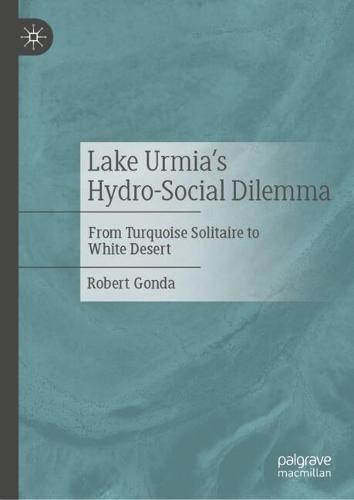
Lake Urmia’s Hydro-Social Dilemma...
From Turquoise Solitaire to White...
Hardback
$385.95 $308.92
Not in-store but you can order this
Wild Tides
Media Infrastructure and Financial...
Paperback
$73.99
Not in-store but you can order this
Pour des territoires urbains compétitifs...
Actes du colloque international...
Paperback
$134.95 $114.44
Not in-store but you can order this