Bargains! PROMOTIONS


Ines A. Ferreira is an independent consultant. At the time of writing she was Assistant Professor and a member of the Development Economics Research Group at the Department of Economics, University of Copenhagen (UCPH-DERG). Rachel M. Gisselquist is Professor in Governance and Development, and Director, Governance and Social Development Resource Centre (GSDRC), University of Birmingham. Finn Tarp is Professor of Development Economics at University of Copenhagen as well as Coordinator of UCPH-DERG. He was Director of the UN University World Institute for Development Economics Research (UNU-WIDER) from 2009 to 2018.
Timely, balanced, and empirically rich, this book gives the inequality debate the careful treatment it deserves. Drawing on the @EQUAL project’s cross-country and in-country evidence from Mozambique, Vietnam, South Africa and Colombia, it combines a ‘dashboard’ of measures with lived perceptions to show why inequality matters for growth, wellbeing and governance. Accessible yet rigorous, it offers evidence and practical insight for policymakers, students, and practitioners alike. An essential guide for anyone serious about understanding and addressing inequality. * Ingrid Woolard, Executive Dean, University of Sussex Business School, UK * Social inequality across all dimensions has emerged as one of the defining challenges of our era. Rising inequality reflects profound transformations not only in economic structures but in the broader social and political fabric of society. This study offers readers a comprehensive, cutting-edge analysis of inequality's multiple facets: what inequality means in contemporary contexts, how it interacts with economic growth, governance systems, and social conflict, and which policy interventions show promise for reducing disparities. * Tony Addison, Non-Resident Senior Research Fellow, UNU-WIDER * The past two decades have seen inequality return to centre stage in economic analysis and popular discourse. Critically important in this effort is the unpacking of inequality to enquire into its myriad expressions, dimensions, consequences, and causes. Ferreira, Gisselquist and Tarp provide a superbly lucid and comprehensive guide to this is often bewildering topic. By highlighting the specific experience of five developing countries they shed light on granular considerations that are often left unaddressed in standard references. Similarly, their exploration of the role of subjective perceptions and of political power relations reveals the importance of these additional perspectives. * Peter Lanjouw, VU Amsterdam *
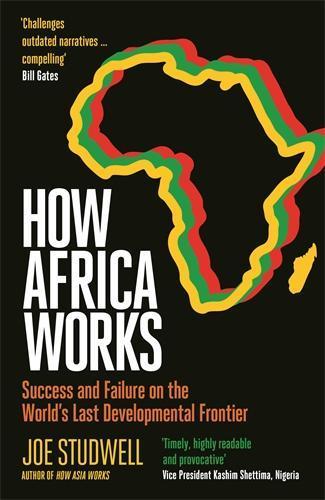
How Africa Works
Success and Failure on the World's...
Hardback
$55
Forthcoming
You can preorder this
Disease Control Priorities, Fourth...
Volume 1 - Country-led Priority-Setting...
Paperback
$104.95 $84.18
Forthcoming
You can preorder this
Indigenous Rights to Land Versus...
The Promise and Limits of ILO Convention...
Paperback
$60.95 $51.51
Forthcoming
You can preorder this
Democracy and Impunity
The Politics of Policing in Modern...
Hardback
$181.95
Forthcoming
You can preorder this