PRIZES to win! PROMOTIONS


Dr. Awanish Kumar is currently an Associate Professor and Head of the Department of Biotechnology at the National Institute of Technology, Raipur (CG), India. He has more than 16 years of research experience. He received his PhD in Biotechnology from the CSIR-Central Drug Research Institute, Lucknow, India, and Jawaharlal Nehru University, Delhi, India, and completed his postdoctoral studies at McGill University, Montreal, Canada. His research interests are infection biology, drug targeting, and drug discovery. He has served on various national and international organizations in different academic and research capacities. He has also served on many national committees and scientific advisory panels, as a member of many international professional research societies, and as a reviewer and editorial board member of reputed and refereed journals. He has authored or edited several monographs, books, and book chapters. Dr. T.R. Anju is currently an Assistant Professor in biotechnology at Newman College, Kerala, India, and Secretary of Society for Biotechnologists, India. She completed her Master’s degree in biotechnology at Gulbarga University, Karnataka, India and doctoral degree at the Centre for Neuroscience, Cochin University of Science and Technology, Kochi, India. She completed her postdoctoral research on a 5-year project funded by the Department of Biotechnology to study the long-term effects of neonatal hypoglycemia. She has published 48 research papers in SCI journals, 27 book chapters, and edited 7 books and is the recipient of the Kerala State Young Scientist Award 2012 by the Kerala State Council for Science, Technology and Environment, and various other awards. Her research is focused on molecular signaling and neurotransmitter receptor functions in the brain under neonatal stress and various disease conditions like diabetes and epilepsy. Currently, her research team is working on nanotechnology and phytoconstituent-based interventions for biomedical applications.
Aging Well with Diabetes
146 Eye-Opening (and Scientifically...
Paperback
$39.99
Not in-store but you can order this
The Type Zero Diabetic
My Journey as Patient Zero
Hardback
$33.95 $30.23
Not in-store but you can order this
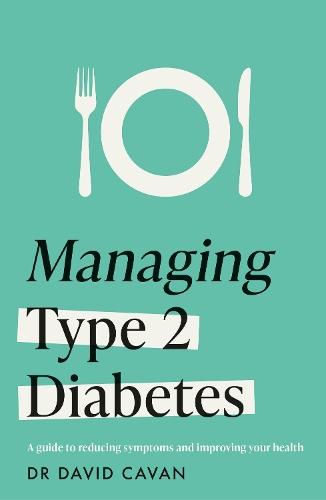
Managing Type 2 Diabetes (Headline...
A guide to reducing symptoms and...
Paperback
$22.99
Not in-store but you can order this