PRIZES to win! PROMOTIONS


Fernanda Feil is the Sustainable Finance Director at the Brazilian Sustainable Finance Centre (CeFiS) and a Professor at Federal Fluminense University (UFF), where she teaches courses in sustainable finance and co-leads the Research Group on Financialization and Development (FINDE). Carmem Feijó is the Academic Director at the Brazilian Sustainable Finance Centre (CeFiS) and a Full Professor of the Economics Department of UFF (Fluminense Federal University), Brazil, and a Senior Researcher at CNPq (the National Council for Scientific and Technological Development of Brazil). Carlos Henrique Horn is an economist and a Full Professor at the Faculty of Economic Sciences of the Federal University of Rio Grande do Sul (UFRGS), Brazil and holds a PhD from the London School of Economics (LSE).
Despite the urgency of the environmental crisis, financial systems across the world continue to support activities that are inconsistent with the limits of a finite planet. The dominance of neoliberal and post-neoliberal ideas in combination with the political hegemony of the dirty private capital has prevented a green transformation of financial systems that would reallocate finance towards greener activities and would discipline dirty financiers. Drawing on the Keynes–Minsky tradition, this book provides an excellent analysis of what is wrong with the existing financial systems, both from an environmental and a social point of view. It advocates for a paradigm shift in the role of finance through the adoption of the principles of sustainable development convention. The book explains in detail how this paradigm shift can be achieved by establishing a new role for the state as the leading actor in the green transformation of industrial and macro-financial structures. The book covers a wide range of reforms that are necessary for a paradigm shift in finance. These include a renewed and expanded role for development banks, the use of new and existing central banking tools to support the green transition, and the adjustment of financial regulation in a way that would discourage dirty finance and would incentivise greener credit. A major strength of the analysis lies in its synthesis of historical perspectives with recent conceptual ideas in the critical macro-finance literature, enabling readers to grasp both the theoretical and practical underpinnings of these reforms. The book adopts a Global South lens, challenging “one-size-fits-all” approaches that typically characterise green finance initiatives. We cannot transform finance in a socially just way if we do not consider local institutional and socio-economic contexts, the differentiated development needs of countries, and the injustices that have been generated by colonial legacies and the global financial hierarchy. The book successfully explains why justice should be at the core of the green transformation of finance. The book is an essential read for anyone seeking alternatives to mainstream green finance narratives. It is also an important call for action and roadmap for policy-makers committed to building fairer and more sustainable economies. - Yannis Dafermos - Reader in Economics at SOAS University of London. His research interests lie in financial macroeconomics, climate finance, ecological macroeconomics, climate-aligned development, inequality and the political economy of the green transition.
It's Time to Rethink Your Fashion...
Creating a Better Future
Paperback
$34.99
Not in-store but you can order this
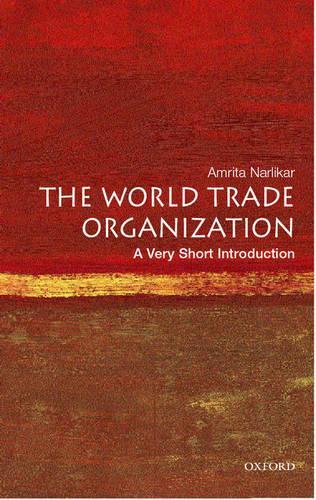
The World Trade Organization
A Very Short Introduction
Paperback
$21.95
Not in-store but you can order this
Sovereign Funds
How the Communist Party of China...
Hardback
$78.95
Not in-store but you can order this
The Price of Civilization
Economics and Ethics After the Fall...
Paperback
$39.99
Not in-store but you can order this
Let Them Eat Crypto
The Blockchain Scam That's Ruining...
Paperback
$30.95
Not in-store but you can order this