Bargains! PROMOTIONS


Francesca Esposito is Researcher in the Department of Psychology “Renzo Canestrari” at the University of Bologna, and Research Associate at the Centre for Social Justice Research at the University of Westminster and at the Centre for Criminology at the University of Oxford. Teresa Degenhardt is Senior Lecturer in Criminology at Queen’s University Belfast and Fellow of the Senator George J Mitchell Institute for Global Peace, Security and Justice. Annika Lindberg is Assistant Lecturer at the School of Global Studies, University of Gothenburg, and holds a PhD in Sociology from the University of Bern.
‘A crucial comparative analysis of how carceral states, across different political terrains, brutally exploited the linked refugee and COVID-19 crises.’ Ruth Wilson Gilmore and Craig Gilmore, California Prison Moratorium Project ‘Spanning Europe’s carceral border regimes, interspliced with the poetic reflections of those who have felt the violence of their enforcement, this book offers insight into the possibilities that can emerge when public health matters more than punishment. As ever more crises hover on our horizons, this is a timely intervention for those interested in building a livable life for all, and for liberation and abolitionist futures.’ Mo Mansfield, Abolitionist Futures and INQUEST ‘Strikingly timely and insightful, this book expertly illuminates today’s rapidly evolving global migration and border crises with clarity and critical credibility.’ Moshood Olanrewaju, Society for Community Research and Action ‘This book offers a sophisticated analysis of the poetics and politics of detention and deportation. It opens up multiple avenues for critical inquiry and political imagination, providing insights that can reinvigorate transnational dialogues with engaged scholars and activists in Latin America.’ Eduardo Domenech, National Scientific and Technical Research Council, Argentina ‘A vital critique of detention and deportation in Europe, revealing how the COVID-19 syndemic deepened border violence and abolitionist horizons.’ Natália Corazza Padovani, Núcleo de Estudos de Gênero Pagu/ UNICAMP ‘A courageous, timely, much-needed collective abolitionist project unmasking border violence through rigorous scholarship and the powerful voices of racialized persons and activists.’ Giulia Fabini, University of Bologna
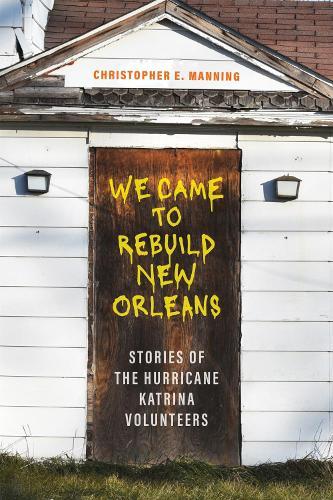
We Came to Rebuild New Orleans
Stories of the Hurricane Katrina...
Paperback
$33.95 $30.19
Forthcoming
You can preorder this