Beat the rise! Delivery fees are going up soon. INFO


Torange Khonsari is a chartered designer, an expert adviser for the Design Council, chair of the ethics committee at the Design Museum and has taught architecture in universities in the UK and internationally. She co-founded the practice Public Works - UK. She is also co-director of the Centre for Applied Research in Empowering Society at London Metropolitan University, UK.
Embodying a wisdom of rich theoretical understanding sustained by twenty years of practical experience, Khonsari's argument situates the collaborative Commons between the institutions of Market and State to disclose opportunities of creative empowerment. With a wealth of detail, vivid examples and an acute understanding of collectives (people, things, nature, technology, laws), this important book should be read not only by practitioners but by every citizen seeking a concrete political life. * Peter Carl, Syracuse University, USA * Commons and Public Partnership: Legitimising a Commons Political Sphere synthesizes two decades of Khonsari’s experience researching, teaching, and practicing commons, using classrooms and neighbourhoods as the theoretical and practical origin for civic innovation and empowerment. This book offers an insightful critique of modern “democratic systems,” beginning by reconceptualizing concepts of state, market, citizen and neighbourhood sovereignty as the basis for societal governance and development. I highly recommend this book for readers looking for a contemporary, urban companion to Elinor Ostrom’s foundational Governing the Commons. * Daniel DeCaro, University of Louisville, USA * This book introduces a new paradigm in commons scholarship, proposing partnerships between commons and public institutions as a way to open new political spaces and forms of collectivity, while positioning the neighbourhood as a key site for commons-based decision-making. * Doina Petrescu, University of Sheffield, UK * Torange Khonsari's Commons and Public Partnership: Legitimising a Commons Political Sphere makes a crucial contribution to commons studies. It is an important and ambitious book based on the author's empirical findings from twenty years of work as an architect and educator. The book describes the design aspects of developing commons organizations, which require new imaginations, knowledge, and new forms of architectural practice. This book is a “must-read” for spatial practitioners, planning authorities, and civil society, cultural, and educational initiatives, opening up new avenues. * Meike Schalk, KTH School of Architecture, Sweden *
The Scope of Architectural Theory...
Hardback
$415.95 $332.78
Not in-store but you can order this
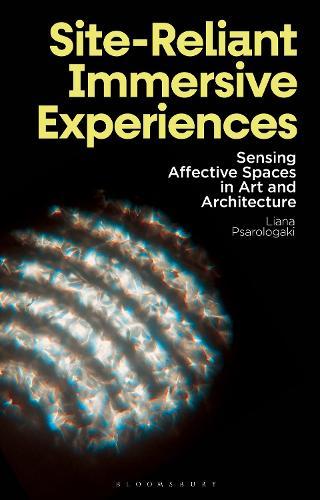
Site-Reliant Immersive Experiences...
Sensing Affective Spaces in Art...
Hardback
$170
Not in-store but you can order this
On Architecture and Greenwashing...
The Political Economy of Space Vol....
Paperback
$39.99
Not in-store but you can order this
The Architecture of Psychoanalysis...
Spaces of Transition
Paperback
$54.99
Not in-store but you can order this
Winter Homes
Stylish Living for Cool Climates...
Hardback
$59.99
Not in-store but you can order this