PRIZES to win! PROMOTIONS


Michael P. Colaresi is Professor of Political Science at Michigan State University.
Democracy Declassified is a superb book that will transform the debate over how democratic governments work in the national security sphere. Michael Colaresi has used careful theorizing, an outstanding series of deeply informative case studies, and beautifully presented quantitative analysis based on original data to evaluate the balance called for between the demands for transparency in democracies and the need for secrecy. Not only does Colaresi explore in a completely original way the balance between secrecy and transparency, he also proposes practical policy solutions to ensure that the right balance is struck... Democracy Declassified is a tour de force in theory development and testing. It should be read by everyone interested in how democracy works or how national security operates. It is a masterful book. Bruce Bueno de Mesquita, Julius Silver Professor of Politics, New York University Democracy Declassified makes a very important and innovative contribution towards understanding international relations in the twenty-first century. Its focus on oversight institutions not only sheds new light on the general connection between domestic political institutions and foreign policy, it also helps frame recent events such as the WikiLeaks and Edward Snowden disclosures. It is essential reading for scholars, students, and policy-makers. Dan Reiter, Professor of Political Science, Emory University Colaresi has written a really exceptional book, which lays solid foundations for an important new research agenda on democracy, secrecy and foreign policy. But Democracy Declassified does much more; in scope, execution and timeliness, it has fundamental implications for various research traditions in political science as well as policy. The mastery of historical detail, care of modeling and attention to detail in its carefully collected new data and analysis make this book an example of the very best scholarship. Hein Goemans, Associate Professor of Political Science, University of Rochester
Technology Development for Security...
Hardback
$236.95 $189.29
Not in-store but you can order this
Spy Watching
Intelligence Accountability in the...
Hardback
$91.95
Not in-store but you can order this
The Five Technological Forces Disrupting...
How Cloud, Social, Mobile, Big Data...
Paperback
$116.95
Not in-store but you can order this
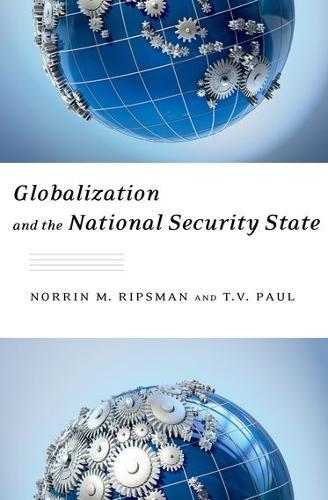
Globalization and the National Security...
Paperback
$76.95
Not in-store but you can order this