Bargains! PROMOTIONS


Dr. Zhangyang (Atlas) Wang is an Assistant Professor of Computer Science and Engineering (CSE), at the Texas A&M University (TAMU), since August 2017. During 2012-2016, he was a Ph.D. student in the Electrical and Computer Engineering (ECE) Department, at the University of Illinois at Urbana-Champaign (UIUC). He was a former research intern with Microsoft Research (2015), Adobe Research (2014), and US Army Research Lab (2013). Dr. Wang has published over 70 papers in top-tier venues, in the broad fields of machine learning, computer vision, artificial intelligence, and interdisciplinary data science. He has published 2 books and 1 chapter, has been granted 3 patents, and has received over 20 research awards and scholarships. Dr. Wang regularly serves as tutorial speakers, guest editors, area chairs, session chairs, TPC members, and workshop organizers at leading conferences and journals. Prof. Yu Fu is a Full Professor at College of Food Science, Southwest University, China. He earned his PhD degree in Food Science from Aarhus University and completed postdoctoral research at University of Copenhagen. He has also served as a visiting scholar at the University of Manitoba and the University of Aberdeen. Dr. Fu has led several research projects, including National Natural Science Foundation grants, National Key R&D Program, etc. He has published over 100 peer-reviewed papers as first or corresponding author in internationally respected journals such as Journal of Advanced Research, Trends in Food Science & Technology, Journal of Agricultural and Food Chemistry, and Food Chemistry. He has contributed to eight English academic books and holds ten national invention patents. He also serves the scientific community in numerous professional and editorial roles, including member of Youth Working Committee of Chinese Association of Animal Products Processing, expert of Technical Advisory Committee of Chongqing Agricultural Product Processing Association, Editor-in-Chief of International Journal of Food Studies, Editor for Trends in Food Science & Technology, Academic Editor for Journal of Food Biochemistry, Deputy Editor for International Journal of Food Science & Technology. He was listed among Elsevier’s “Top 2% Scientists (2023–2025) and has received awards including the ACU Early Career Award, Foods Outstanding Young Scholar Award, Excellent Instructor Award for International College Students’ Innovation Competition (Gold award), EFFoST “PhD Student of the Year award, and the Best Oral Presentation Award at the ICoMST. Thomas S. Huang received his B.S. Degree in Electrical Engineering from National Taiwan University, Taipei, Taiwan, China; and his M.S. and Sc.D. Degrees in Electrical Engineering from the Massachusetts Institute of Technology, Cambridge, Massachusetts. He was on the Faculty of the Department of Electrical Engineering at MIT from 1963 to 1973; and on the Faculty of the School of Electrical Engineering and Director of its Laboratory for Information and Signal Processing at Purdue University from 1973 to 1980. Dr. Huang's professional interests lie in the broad area of information technology, especially the transmission and processing of multidimensional signals. He has published 21 books, and over 600 papers in Network Theory, Digital Filtering, Image Processing, and Computer Vision. Among his many honors and awards: Honda Lifetime Achievement Award, IEEE Jack Kilby Signal Processing Medal, and the King-Sun Fu Prize of the International Association for Pattern Recognition.
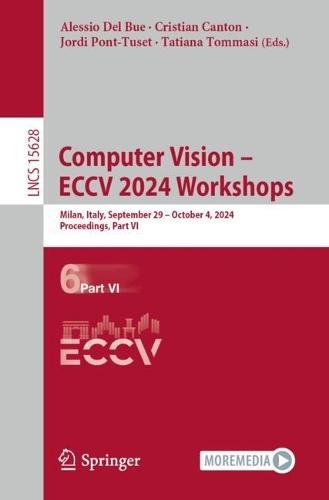
Computer Vision – ECCV 2024 Workshops...
Milan, Italy, September 29–October...
Paperback
$370.95 $296.98
Not in-store but you can order this
We See It All
liberty and justice in the age of...
Paperback
$32.99
Not in-store but you can order this
Pattern Analysis and Machine Intelligence...
First International Conference,...
Paperback
$221.95 $177.72
Not in-store but you can order this
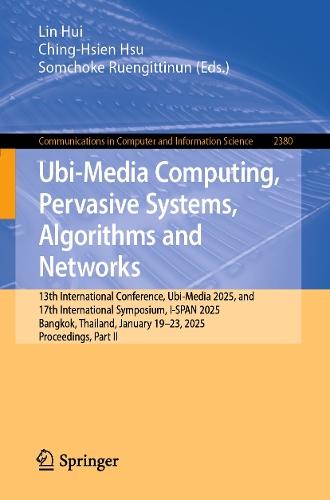
Ubi-Media Computing, Pervasive Systems,...
13th International Conference, Ubi-Media...
Paperback
$221.95 $177.72
Not in-store but you can order this
Computational Intelligence in Surveillance...
Paperback
$382.95
Not in-store but you can order this
Algorithms and Architectures for...
24th International Conference, ICA3PP...
Paperback
$162.95 $130.01
Not in-store but you can order this