Bargains! PROMOTIONS


Dr. Li Dekai is a researcher and scholar specializing in hyperspectral image processing and remote sensing, with a Ph.D. in Information and Communication Engineering from Hainan University. His academic pursuits are focused on innovative techniques in image processing, including spectral-spatial feature fusion for ecological applications and advanced medical image watermarking algorithms. Dr. Li has co-authored multiple high-impact publications in journals such as Electronics and IET Biometrics, showcasing robust methodologies in image encryption, watermarking, and metamaterials. His research contributions also include patented innovations in medical image processing, employing advanced deep learning models like DarkNet53 and Vision Transformers. Throughout his career, Dr. Li has actively contributed to several projects, such as developing hyperspectral image classification methods for mangrove species and pioneering robust watermarking techniques for medical images. His expertise bridges the gap between theory and practical applications, advancing the fields of remote sensing and secure image processing. Uzair Aslam Bhatti was born in 1986. He received the Ph.D. degree in information and communication engineering, Hainan University, Haikou, Hainan, in 2019. He is pursuing the Postdoctoral degree in implementing Clifford algebra algorithms in analyzing the geospatial data using artificial intelligence (AI) with Nanjing Normal University, Nanjing, China. His areas of specialty include AI, machine learning, and image processing. Dr. Sibghat Ullah Bazai is a renowned academic and researcher specializing in cybersecurity, remote sensing, and related technologies. He has made significant contributions to image classification, GIS applications, and environmental monitoring. As Chairperson of Computer Engineering at BUITEMS, Quetta, Pakistan, he has advanced academic excellence and fostered research initiatives. With a Ph.D. in Information Technology (Cybersecurity) from Massey University, New Zealand, Dr. Bazai has extensive experience in applying machine learning and deep learning to geospatial datasets. He has co-authored high-impact papers in top-tier journals and conferences, covering topics such as medical image anomaly detection, GIS-based urban property tax systems, and high-performance computing for environmental applications. His expertise in remote sensing data has established him as a leader in sustainable development research. Dr. Mir Muhammad Nizamani is a dedicated researcher specializing in hyperspectral remote sensing and ecological studies. With a Ph.D. from Hainan University, Dr. Nizamani’s work focuses on the spatial and ecological patterns of urban plant diversity in cities like Karachi, Haikou, and Sanya. His expertise includes applying advanced statistical and machine learning techniques to analyze and model ecological data. Dr. Nizamani has published extensively in high-impact journals, with over 45 scientific papers exploring topics like urban forestry, plant diversity, and the impacts of urbanization on ecological systems. His innovative approaches to remote sensing and ecological modeling contribute to understanding sustainable urban development and biodiversity conservation. Through a strong foundation in plant science and genetics, combined with advanced data analysis skills, Dr. Nizamani continues to make impactful contributions to remote sensing and environmental research.
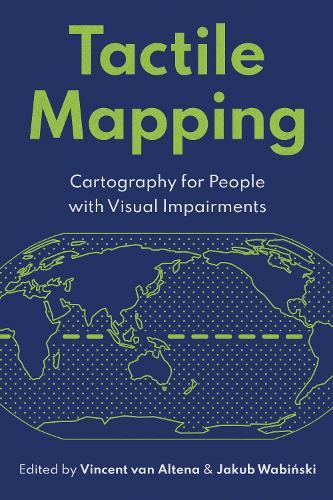
Tactile Mapping
Cartography for People with Visual...
Hardback
$173.95 $139.20
Not in-store but you can order this
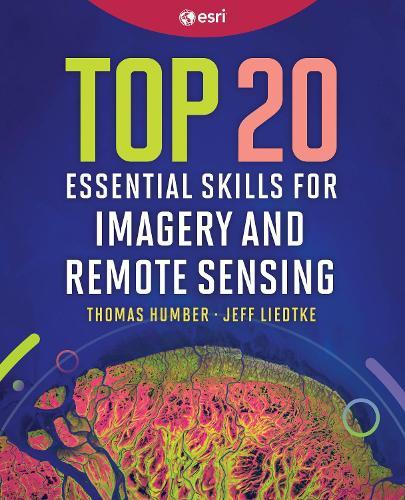
Top 20 Essential Skills for Imagery...
Hardback
$264.95 $211.89
Not in-store but you can order this
Mapping Community Health
GIS for Health and Human Services...
Paperback
$34.99
Not in-store but you can order this
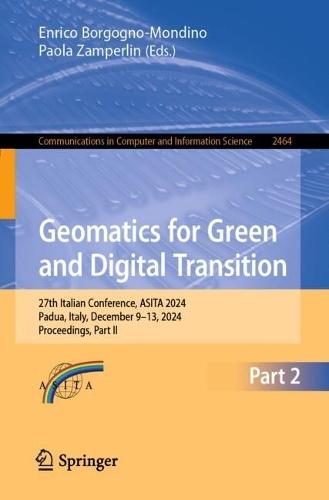
Geomatics for Green and Digital...
27th Italian Conference, ASITA 2024,...
Paperback
$206.95 $165.78
Not in-store but you can order this
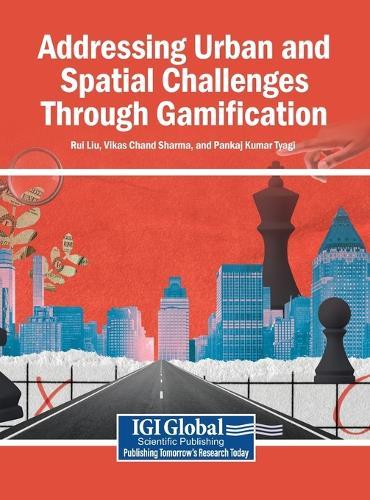
Addressing Urban and Spatial Challenges...
Hardback
$427.95 $342.43
Not in-store but you can order this