Bargains! PROMOTIONS


Sally Everett is Professor of Business Education and Director, I-LEAD, King’s Business School, UK. Her research interests include tourism, inclusive education, scholarship of learning and teaching and decolonising the curriculum.
This is a book for these times – a tour de force! Sally Everett digs deep to interrogate the possibilities of decolonising tourism education, advocating 'Tourism studies should play a leading role in broader education and the decolonising project, given that its primary object of study is the interaction of peoples and places'. I couldn’t agree more and highly recommend this simultaneously thoughtful and practical volume. * Freya Higgins-Desbiolles, University of South Australia * Lucidly written and cogently argued, this book explains that to meaningfully interrogate sources and structures of colonial power imbalances in tourism and its pedagogy, we need to reimagine how tourism is taught and learned through enlightened engagement with the geopolitics of knowledge production. Everett informs us of why it is important to decolonise the tourism curriculum and shows us how to do it in key domains. This is a ‘must-read’ book for all tourism educators. * Scott McCabe, University of Birmingham, UK * A long awaited, critical, deeply reflective, and practical treatise on decolonisation in tourism education. This book is vital for earnest seekers of generative discussions about the why, what, where, who and how of decolonisation. A truly triumphant and unapologetic contribution to the voices for social justice in tourism higher education! * Donna Chambers, Northumbria University, UK *
Jeremy Catto
A Portrait of the Quintessential...
Hardback
$64.99
Not in-store but you can order this
Higher Music Education and Employability...
Paperback
$59.99
Not in-store but you can order this
The Lived Experiences of a Non-Academic...
Paperback
$65.95 $58.95
Not in-store but you can order this
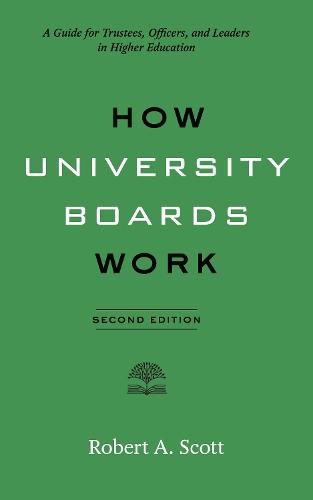
How University Boards Work
A Guide for Trustees, Officers,...
Paperback
$68.99
Not in-store but you can order this