Bargains! PROMOTIONS


Professor Xiao Huang is an Assistant Professor at the Department of Environmental Sciences at Emory University. His research primarily focuses on geospatial analysis, geovisualization, environmental modeling, computer and data science, and Big Data analytics. His research takes advantage of and also addresses the challenges of rapidly growing data availability through the utilization and development of advanced data fusion techniques and deep learning algorithms. Dr. Huang has authored/co-authored over 120 refereed publications. He serves as an Associated Editor for Computational Urban Science and sits on the Editorial Board for Big Earth Data, International Journal of Digital Earth, Frontiers Remote Sensing, Nature Scientific Reports, Journal of Remote Sensing, Current Social Sciences, and PLOS ONE. He also serves as a reviewer for NASA and NSF grants and for 49 esteemed scientific journals. Professor Siqin (Sisi) Wang is an Associate Professor of Spatial Sciences with the Spatial Sciences Institute in the Dornsife College of Letters, Arts and Sciences at the University of Southern California. Dr. Wang’s research interests are in GIScience, spatiotemporal big data analytics, computational social science, digital health geography, human-centered GeoAI, human mobility and migration, smart cities and human-climate interactions and she has published extensively in these areas. Her professional roles include service as the Associated Chair for the Spatial Data Lab affiliated with Harvard University and as Vice Chair of the Young Scientist Innovation Network for Digital Earth of the International Society for Digital Earth. Prior to joining the USC Spatial Sciences Institute, Dr. Wang was an Adjunct Senior Lecturer at the Royal Melbourne Institute of Technology, Australia, and an Honorary Lecturer/Research Fellow with the University of Queensland, Australia. From April 2022 to July 2023, she also was a JSPS Research Fellow with the University of Tokyo, Japan, researching healthcare access and social vulnerability in post-COVID Japan. Dr. Kleomenis Kalogeropoulos is a Survey Engineer (Ph.D., MSc, and BSc), and an adjunct lecturer at the Department of Surveying and Geoinformatics Engineering, University of West Attica, Greece. His research interests are focused on GIS, SDI, spatial analysis, spatial epidemiology, natural disaster modeling, geoarchaeology, digital cartography, and geography. He is also a lecturer at the Greek National Centre for Public Administration & Local Government, a certified evaluator of the Greek General Secretariat in Research and Technology and an Expert in Earth Sciences in the use of GIS and Remote Sensing applications for the Institute of Educational Policy, of the Greek Ministry of Education. He boasts a publication record of over 100 articles in scientific journals and international conferences, which have garnered numerous references. His involvement extends to over 15 national and international research programs. Additionally, he serves as a reviewer for more than 25 esteemed scientific journals. Professor Andreas Tsatsaris is a Rural and Surveying Engineer and President of the Department of Surveying and Geoinformatics Engineering of the University of West Attica (UniWA), Greece. He is also Director of the Research Laboratory ""GAEA"". He has been teaching since 1996 in Spatial Epidemiology, Medical Geography, GIS, and Thematic Cartography in both Postgraduate and Undergraduate Studies Programs of the Faculty of Medicine at the University of Crete and Aristotle University of Thessaloniki, and the Faculty of Engineering at UniWA. He has published over 90 articles in scientific journals and international conferences and has participated in over 30 national and international research programs. He is a certified evaluator of the State Scholarship Foundation and General Secretariat in Research and Technology in the evaluation of research proposals.
The Application of GIS Technologies...
Spatial Analysis, Historic Modelling...
Hardback
$170
Not in-store but you can order this
GIS for Science
Applying Mapping and Spatial Analytics,...
Paperback
$69.99
Not in-store but you can order this
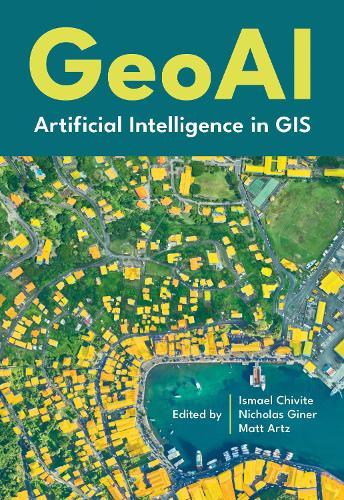
GeoAI
Artificial Intelligence in GIS
Hardback
$122.95 $98.54
Not in-store but you can order this
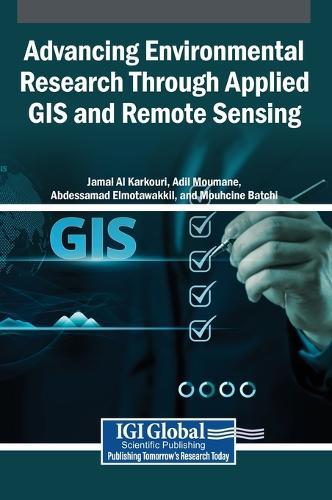
Advancing Environmental Research...
Hardback
$531.95 $425.94
Not in-store but you can order this
Mapping with Altitude
Designing 3D Maps
Paperback
$173.95 $139.20
Not in-store but you can order this