PRIZES to win! PROMOTIONS


James Kraska is Charles H. Stockton Chair of International Maritime Law at the US Naval War College and Visiting Professor of Law and John Harvey Gregory Lecturer on World Organization at Harvard Law School, where he teaches International Law of the Sea. He has taught at the University of the Philippines College of Law, Gujarat National Law University, and Duke University Nicholas School of the Environment, and served as a Guest Investigator at the Marine Policy Center, Woods Hole Oceanographic Institute. He is a retired a US Navy judge advocate. Hayoun Ryou-Ellison is Assistant Professor at the College of International Security Affairs at the National Defense University in Washington, DC. She previously taught at Howard University, the Catholic University of America, and Virginia Commonwealth University. She was a non-resident fellow at the Korea Institute for Maritime Strategy (KIMS) from 2022 to 2024. Previously, she worked in New Delhi, India, where she was an Associate Fellow at the Observer Research Foundation, a Visiting Fellow at the Institute of Peace and Conflict Studies, and a Visiting Scholar at the Institute for Defence Studies and Analyses.
Cultural Influences on the Law of the Sea does something magic and increasingly rare in modern academic publishing; the editors and a talented lineup of scholars have noted an essential aspect of something long forgotten but fundamental. That would be enough in itself to, at least from an academic perspective, recommend this book. The book should be anticipated to significantly contribute to the field, offering diverse perspectives on the cultural dimensions of maritime law. This book is a critical and valuable resource for scholars, legal practitioners, and policymakers interested in understanding the cultural dimensions of maritime law. It encourages readers to appreciate the complexities of integrating cultural perspectives into legal systems governing international waters. We need to see more of this type of work; well done to the team. * James WE Smith, The Naval Review * This is an engaging read. * , Andrew LambertThe Naval Review * This unusual book should be a mainstay of maritime law literature. It assembles regional standpoints to show how cultural norms and traditions have affected the law of the sea, for example freedom of seas, state sovereignty and preservation of marine space. There is also some intersection with elements of commercial maritime law, such as maritime security and deep seabed mining. * Carlo Corcione, The Law Society Gazette *
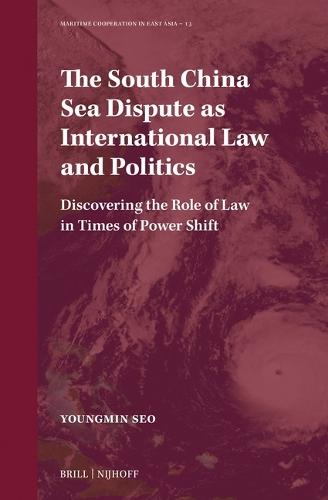
The South China Sea Dispute as International...
Discovering the Role of Law in Times...
Hardback
$423.95 $339.05
Not in-store but you can order this
The Dokdo/Takeshima Dispute
South Korea, Japan and the Search...
Hardback
$433.95 $346.93
Not in-store but you can order this
Reeds Marine Deck 1
Collision Regulations Handbook
Paperback
$54.99
Not in-store but you can order this
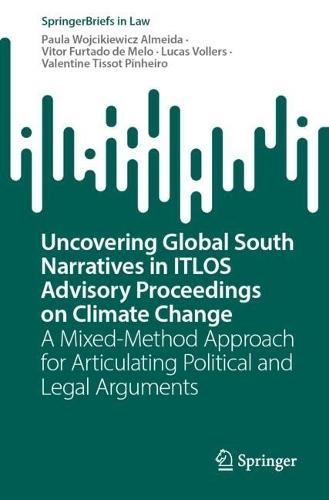
Uncovering Global South Narratives...
A Mixed-Method Approach for Articulating...
Paperback
$111.95 $89.44
Not in-store but you can order this