PRIZES to win! PROMOTIONS


Hans Gustav Adolf Gross was an Austrian criminal jurist and criminologist recognized as the founding figure of modern criminal profiling. Born to Josef Gross and Anna Schier on December 26, 1847, in Graz, Austria, he pursued his education at the University of Graz, where he developed an early fascination with law and human behavior. His career combined legal expertise with scientific observation, leading to the establishment of criminalistics as a distinct discipline. Gross emphasized the importance of understanding the psychological and behavioral patterns behind criminal acts to improve investigation and justice. His most influential work, Criminal Psychology: A Manual for Judges, Practitioners, and Students, integrated psychology with legal practice, shaping how evidence, testimony, and motive were analyzed. As a professor and researcher, he contributed to building the foundations of forensic science, promoting the use of empirical methods in law enforcement. His legacy continued through his son Otto Gross and through generations of criminologists who expanded upon his theories. Hans Gross died on December 9, 1915, in Graz, leaving an enduring mark on criminology and judicial science.
A History of Criminal Law in New...
Volume 2 The New State, 1901-1955...
Hardback
$85
In Stock 😊
Legal Responses to Cyberterrorism...
A Comparative Study between China...
Hardback
$398.95 $319.42
Not in-store but you can order this
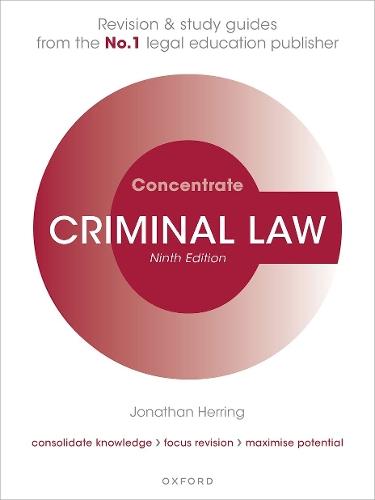
Criminal Law Concentrate
Law Revision and Study Guide
Paperback
$35.95
Not in-store but you can order this
Valuing Employment Rights
A Study of Remedies in Employment...
Paperback
$86.99
Not in-store but you can order this