Bargains! PROMOTIONS


Catherine Herfeld is professor of philosophy and history of economics at the Leibniz University Hannover, Germany. Her research concerns the history and methodological appraisal of rational choice theories in the social sciences, for which she received prizes by the History of Economics Society, Witten/Herdecke University and the Bavarian Academy of Sciences and Humanities.
'In this engaging and illuminating collection, Catherine Herfeld masterfully brings together leading voices in economics, psychology, and philosophy to explore the foundations, challenges, and future of rational choice. The book provides a rare glimpse into the minds of key thinkers, offering deep insights into their intellectual journeys and the evolution of the field. A must-read for anyone interested in the philosophy and methodology of rational decision-making.' Stephan Hartmann, Munich Center for Mathematical Philosophy, LMU Munich 'Conversations on Rational Choice offers a dazzling array of fresh historical and philosophical insights into the making, the functioning, and the backstage of rational choice theory. The book is both a toolbox for historians and philosophers interested in rational choice theory, and a convincing demonstration of the inherent plurality of practices that constitute that theory (or set of theories).' Dorian Jullien, Centre d'Économie de la Sorbonne, Université Paris 1 Panthéon-Sorbonne 'Through a series of thoughtful conversations, Herfeld engages critically yet respectfully with an A-list of economists, philosophers, and psychologists. The conversations uncover implicit assumptions, reveal epistemic commitments, and - above all - illuminate diverse uses of rational choice theory. This outstanding book fosters a nuanced, practice-aware, and philosophically grounded understanding of rational choice theories. In doing so, it helps address and (hopefully) bridge the long-standing gap between philosophical critiques and scientific practice.' Malte F. Dold, Pomona College 'Catherine Herfeld has crafted her twenty-three conversations with economists, psychologists, and philosophers on rational choice theory with remarkable theoretical command, provocative questioning, and methodological awareness. The result is a book that is both illuminating and entertaining. For historians of 20th-century economics and scholars of economic methodology, it stands out as an indispensable reference.' Ivan Moscati, Professor of Economics, University of Insubria & Bocconi University
Identity Economics
How Our Identities Shape Our Work,...
Paperback
$34.99
Not in-store but you can order this
Brand Desire
Spark Customer Interest Using Emotional...
Hardback
$115.95
Not in-store but you can order this
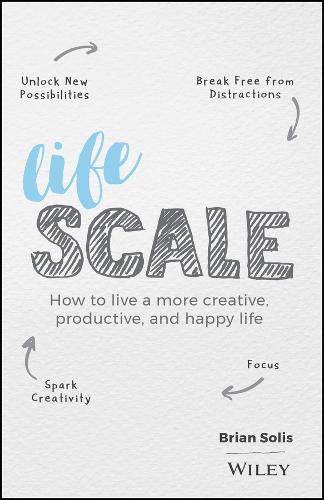
Lifescale
How to Live a More Creative, Productive,...
Hardback
$49.95
Not in-store but you can order this
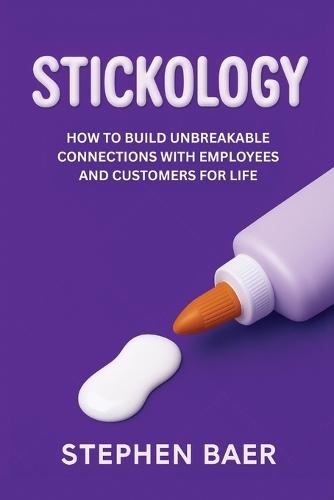
Stickology
How to Build Unbreakable Connections...
Paperback
$43.95 $37.12
Not in-store but you can order this
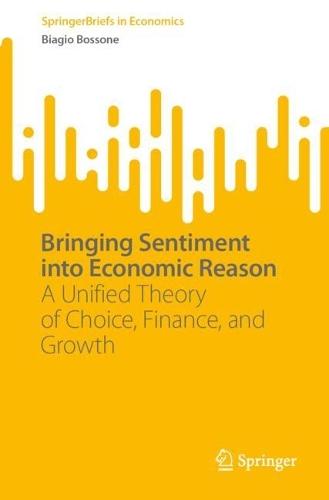
Bringing Sentiment into Economic...
A Unified Theory of Choice, Finance,...
Paperback
$111.95 $89.44
Not in-store but you can order this