Beat the rise! Delivery fees are going up soon. INFO


Deanna L. Fassett is a professor of communication and chair of the Department of Communication Studies at San José State University. She is the co-author of Critical Communication Pedagogy and Coordinating the Communication Course: A Guidebook and co-editor of The SAGE Handbook of Communication and Instruction (all with John T. Warren). Her published research has appeared in an array of communication studies journals, including Basic Communication Course Annual, Communication and Critical/Cultural Studies, Communication Education, and Communication Teacher. Dr. Keith Nainby is a professor of communication within the Department of Communication Studies at California State University, Stanislaus. His publications include chapters in The SAGE Handbook of Communication and Instruction and The Invisibility Factor: Administrators and Faculty Reach Out to First-Generation College Students, as well as journal articles in Liminalities: A Journal of Performance Studies, Language and Intercultural Communication, and Educational Foundations. Dr. John T. Warren was a professor of communication at Southern Illinois University, Carbondale. He was the author of numerous books including Performing Purity: Whiteness, Pedagogy and the Reconstitution of Power, Casting Gender: Women and Performance in Intercultural Contexts, Critical Communication Pedagogy, and Coordinating the Communication Course: A Guidebook. He authored articles for several education and communication studies journals, including Communication and Critical/Cultural Studies, Communication Education, Educational Theory, and Text and Performance Quarterly.
Praise for Communication: A Critical/Cultural Introduction: ""I am a huge fan....I've tried other books, but nothing gets my students open to Communication and dialogue like this text. They feel like they know the authors and become just as excited as I am about reading and learning. The ultimate compliment is that they go home and talk to their families about the class....I have been using this book in some format since its first edition. It continues to help make my teaching successful, so I am going to follow every edition as it comes. ... I will continue to echo this in all the book's editions: The examples offered in the text and the narrative format allow my students to open up in conversations about how to apply communication in their everyday lives. ... Many of our students become student leaders and cite this class and, in proximity, this book for their confidence and advocacy."" Andrea Baldwin, University of Houston-Clear Lake ""This is the most engaging and honest communication textbook I've ever used. The fact that it covers the theories and history of the discipline I want my students to learn about is a bonus. Everything from the criticism of textbooks in the first chapter to the personal stories the authors include keep my students interested. The authors describe theories in a way that makes them personal for my students and use language that is readable without oversimplifying....At the end of the semester, they usually comment on how much they enjoy the book in my teaching evaluations. This is the only class in which they never complain about the book."" Chris Lancaster, College of the Redwoods ""I have been searching for a text that situates public speaking within the field of communication studies in a way that is relevant to undergraduate students not yet immersed in their major programs and not yet highly integrated in the world around them. Communication: A Critical/Cultural Introduction effectively examines public communication as public advocacy and introduces students to the democratic ideal of personal responsibility for the quality of our lives and those around us. I am relieved to find this approach in our current global and political climate."" Shelley-Jean Bradfield, Central College ""[This text] helps me identify and apply relational dynamics theory and concepts including those related to interpersonal communication, gender communication, intercultural communication, and organizational communication. It also helps to demonstrate effective group communication skills including leadership, problem-solving, decision-making, and conflict management by bringing challenging topics within the contexts of public advocacy and civic engagement."" Lydia Huerta Moreno, University of Nevada, Reno ""The [book's] critical/cultural approach make
Power Over Themselves
The Literary Controversy about Female...
Paperback
$32.95 $29.22
Not in-store but you can order this
Prostitution in the Modern World...
Paperback
$39.95 $34.21
Not in-store but you can order this
Immanent Critiques
The Frankfurt School under Pressure...
Paperback
$42.99
Not in-store but you can order this
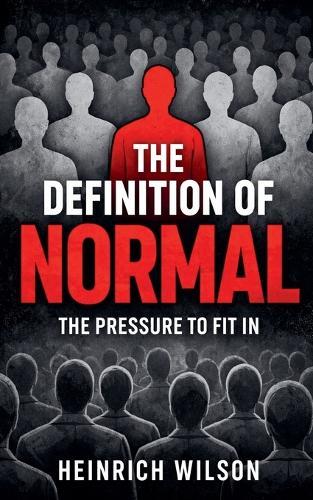
The Definition of Normal
The Pressure to fit in
Paperback
$26.95 $24.62
Not in-store but you can order this